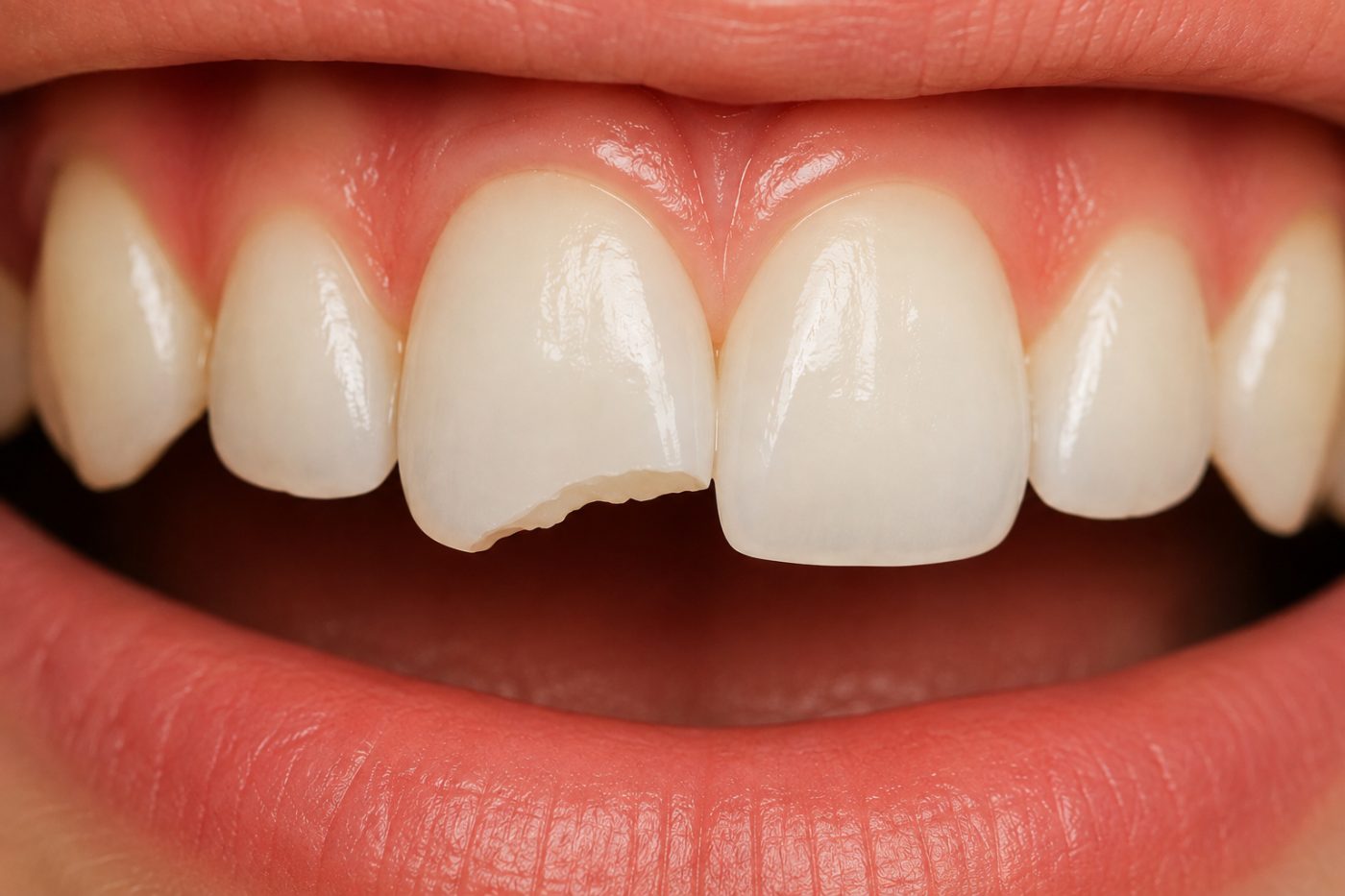
In short: For a chipped tooth, rinse your mouth with warm water, save any broken piece in milk, and use dental wax or sugar-free gum to cover a sharp edge. Take a painkiller if needed and avoid chewing on it. See a dentist soon — even a painless chip should be checked so it doesn’t worsen.
A chipped tooth is common — from biting something hard, a knock, or grinding — and it ranges from a tiny cosmetic chip to a significant break. Here’s what to do right away:
- Rinse your mouth with warm water to clean the area.
- Save any broken fragment if you can, keeping it in milk or water — sometimes it can be bonded back on.
- Cover a sharp edge with dental wax (from a pharmacy) or a piece of sugar-free chewing gum, so it doesn’t cut your tongue or cheek.
- Take an over-the-counter painkiller if it’s sore, and use a cold compress on the cheek for any swelling.
- Avoid chewing on that side and steer clear of very hot, cold or hard foods.
Even if the chip is small and doesn’t hurt, it’s worth seeing a dentist. A chip can leave the tooth weaker or with a rough edge that traps plaque, and a crack may extend deeper than it looks. Getting it assessed early keeps a small fix from becoming a big one.
Depending on the size, treatment might be a simple smoothing and polishing, a tooth-coloured bonding or filling, or for larger breaks a crown or veneer. If the break is deep enough to expose the nerve (severe pain, bleeding from the tooth), see a dentist urgently.
Book an appointment to have the chip assessed and repaired — for a natural-looking fix, our cosmetic and restorative options can restore it beautifully.