
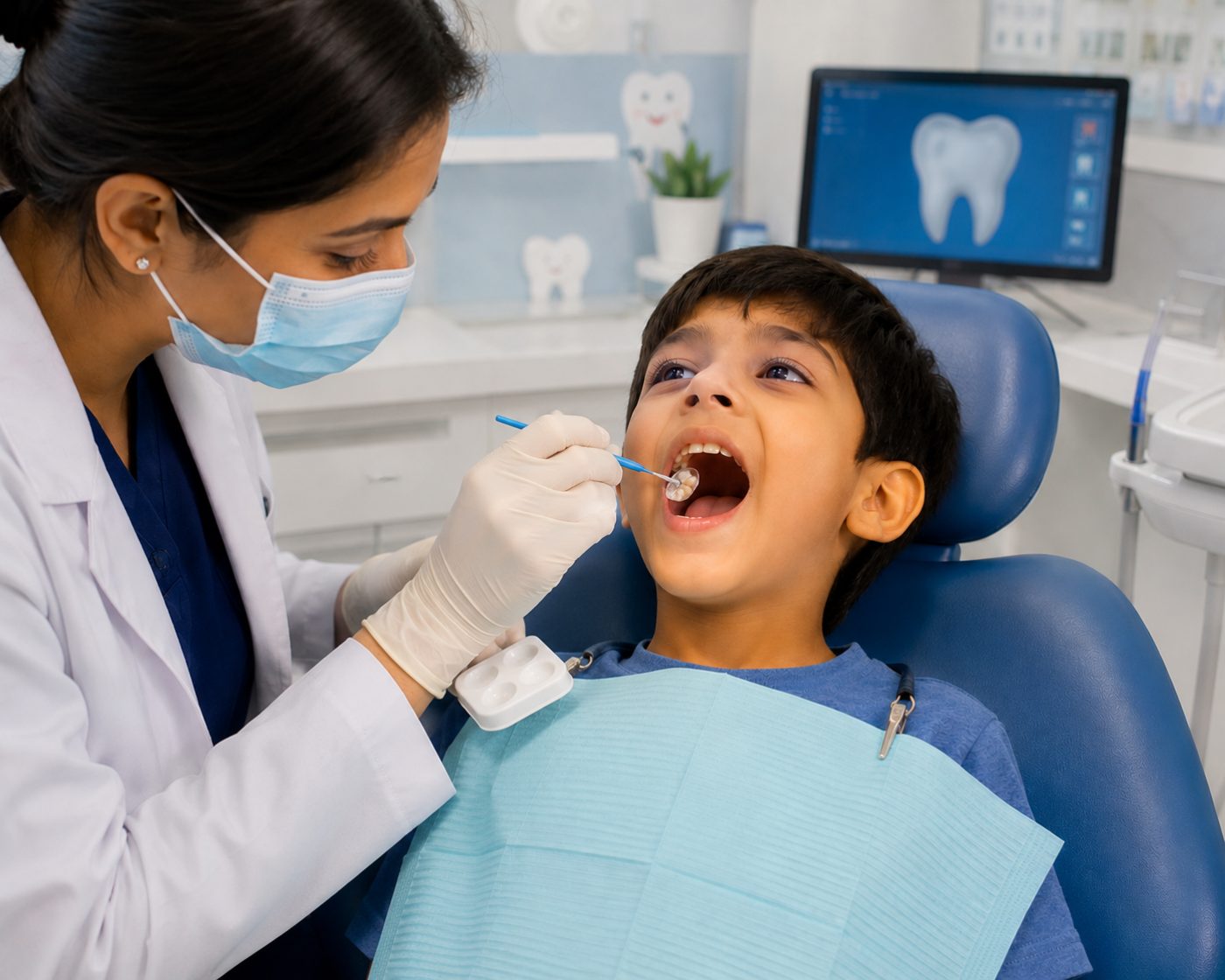
In short: Sealants are a thin protective coating painted onto the grooves of the back teeth, blocking cavities exactly where children get them most. It’s quick and painless — no drilling or injection. They’re usually applied to the permanent molars around ages 6 and 12, and work alongside good brushing, not instead of it.
Dental sealants are a thin, protective coating painted onto the chewing surfaces of the back teeth (molars) to prevent cavities. They’re one of the simplest, most effective preventive treatments in children’s dentistry — quick, completely painless, and highly protective.
Why the back teeth? The chewing surfaces of molars are full of tiny pits and grooves where food and bacteria get trapped and where a toothbrush bristle simply can’t reach. These grooves are the most common place for cavities to start in children. A sealant flows into those grooves and sets hard, forming a smooth barrier that keeps food and bacteria out — dramatically reducing the risk of decay in exactly the spot children get it most.
How it’s done: The tooth is cleaned and dried, the liquid sealant is painted on, and a special light sets it in seconds. There’s no drilling, no injection, and no discomfort. The whole thing takes only a few minutes per tooth.
Does your child need them? Sealants are usually recommended for the permanent back molars soon after they come through — the first around age 6 and the second around age 12 — which is when they’re most vulnerable. Children who are prone to cavities or have deep grooves benefit most. Sealants last for years, and a dentist checks them at each visit and tops them up if needed.
Sealants work best alongside good brushing, fluoride toothpaste and a low-sugar diet — not as a replacement for them.
To find out whether sealants would help your child, book a children’s check-up and we’ll assess their teeth.