
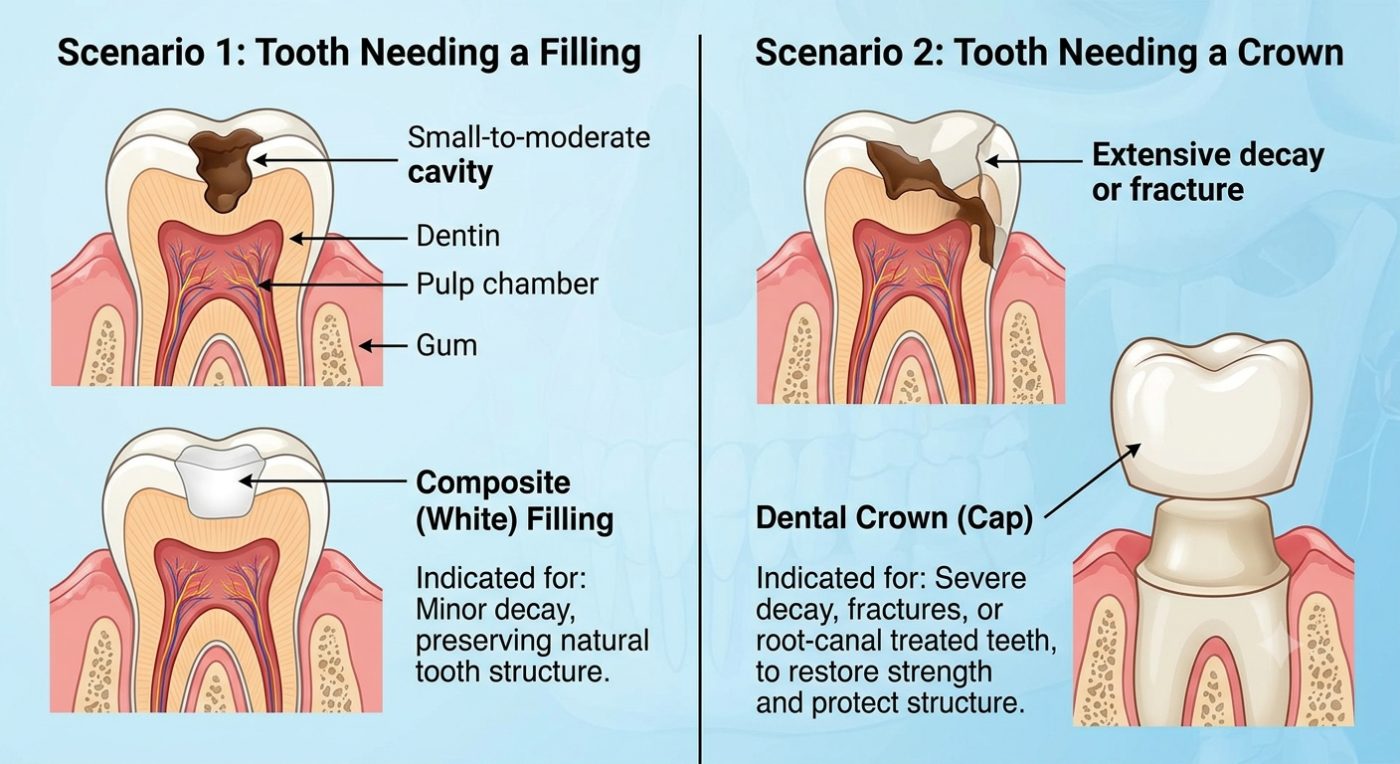
In short: You typically need a crown when a tooth is too damaged, weak or heavily filled for a simple filling to fix — such as after a root canal, a large fracture, or extensive decay. A crown covers and protects the whole tooth, restoring its strength and appearance. Your dentist will recommend one when a filling won’t be enough.
A crown (“cap”) is recommended when a tooth needs more protection or rebuilding than a filling can provide. It covers the entire visible tooth, holding it together and restoring its shape and strength. The common situations are:
- After a root canal. A root-treated tooth becomes brittle and is prone to fracturing, so a crown is usually placed to protect it and let it function for years.
- A large fracture or crack. A crown holds a cracked tooth together and prevents the crack spreading, which could otherwise mean losing the tooth.
- Extensive decay or a very large filling. When so much tooth is lost that a filling would be weak or keep failing, a crown restores it more reliably.
- A worn-down or broken tooth, including from heavy grinding.
- To cover a dental implant or to anchor a bridge replacing a missing tooth.
- Cosmetic reasons — to improve a badly shaped or discoloured tooth (though veneers are often preferred for purely cosmetic front-tooth cases).
The general principle: fillings repair smaller damage; crowns rescue and protect teeth that are significantly weakened. Choosing a crown at the right time can save a tooth that would otherwise crack beyond repair.
Your dentist will only recommend a crown when it’s genuinely the best way to save the tooth, and will explain why. If you have a heavily damaged or root-treated tooth, book an appointment to discuss whether a crown is needed.