
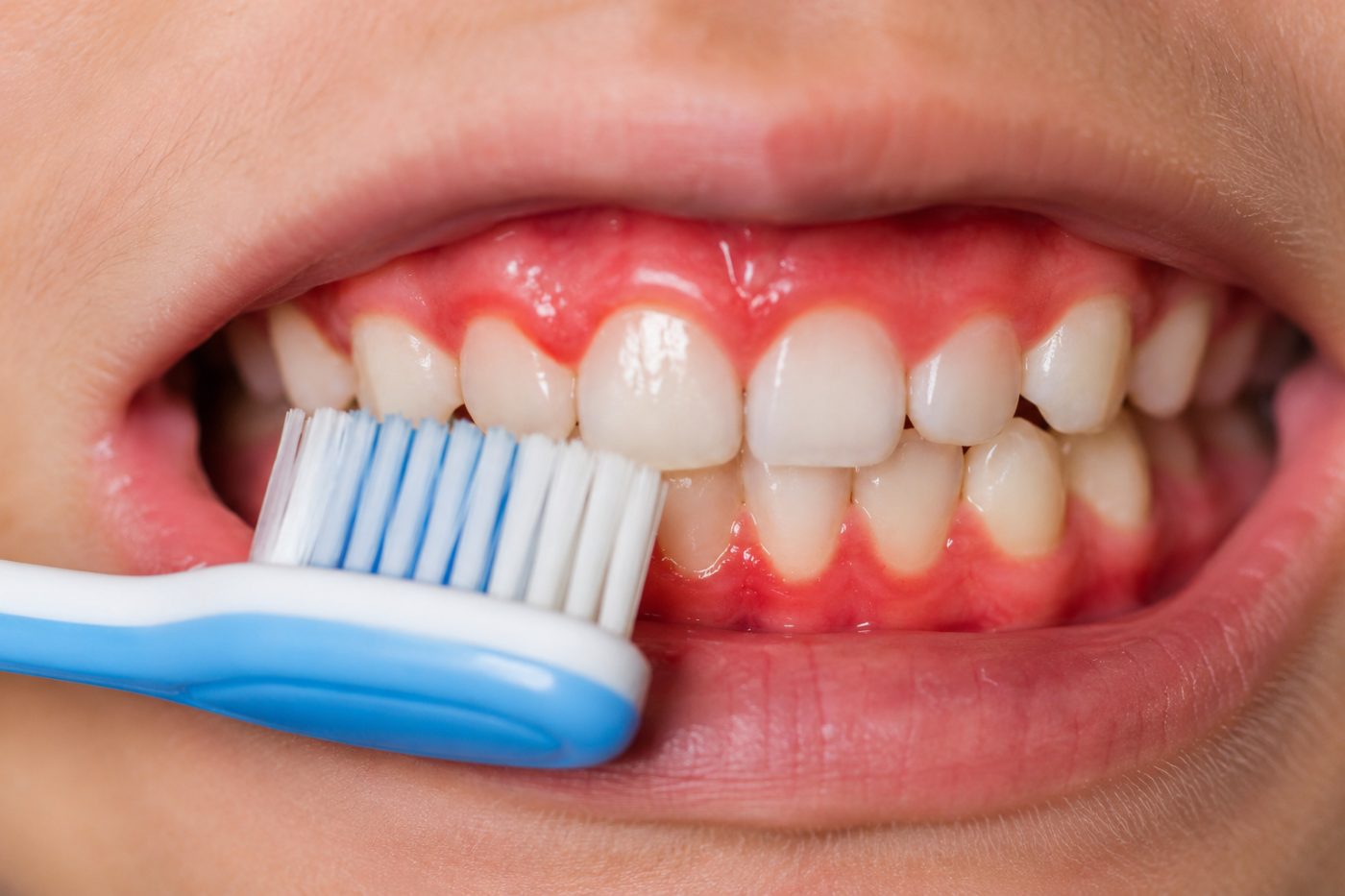
In short: Bleeding gums when brushing almost always mean gingivitis — early, reversible gum inflammation caused by plaque along the gumline. The fix is usually to clean more thoroughly and gently (not less), plus a professional cleaning. See a dentist if it’s heavy, persistent, or your teeth feel loose.
Gums that bleed when you brush are almost always a sign of gum inflammation — most commonly the early stage of gum disease called gingivitis. Healthy gums don’t bleed. So while a little blood in the sink is easy to ignore, it’s actually your mouth telling you something needs attention.
The usual cause is plaque — a soft, sticky film of bacteria — building up along the gumline. When plaque isn’t removed thoroughly every day, it irritates the gums, making them red, puffy and prone to bleeding at the slightest touch. The good news is that gingivitis at this stage is completely reversible with good cleaning.
Here’s the part that surprises people: if your gums bleed when you brush or floss, the answer is not to brush less — it’s usually to clean more thoroughly and gently, because the bleeding is caused by the plaque you’re leaving behind. As the gums get healthier over a week or two of good cleaning, the bleeding settles down.
What helps:
- Brush twice a day for two minutes with a soft brush, angled at the gumline.
- Clean between your teeth daily with floss or interdental brushes — this is where bleeding often starts.
- Get a professional cleaning to remove hardened tartar that brushing can’t shift.
When to see a dentist sooner: if bleeding is heavy or persistent despite good cleaning, if your gums are receding, teeth feel loose, or you have persistent bad breath — these can signal more advanced gum disease (periodontitis) that needs professional treatment.
Don’t ignore bleeding gums — caught early, it’s easily reversed. Book a gum check and cleaning and we’ll get your gums healthy again.