
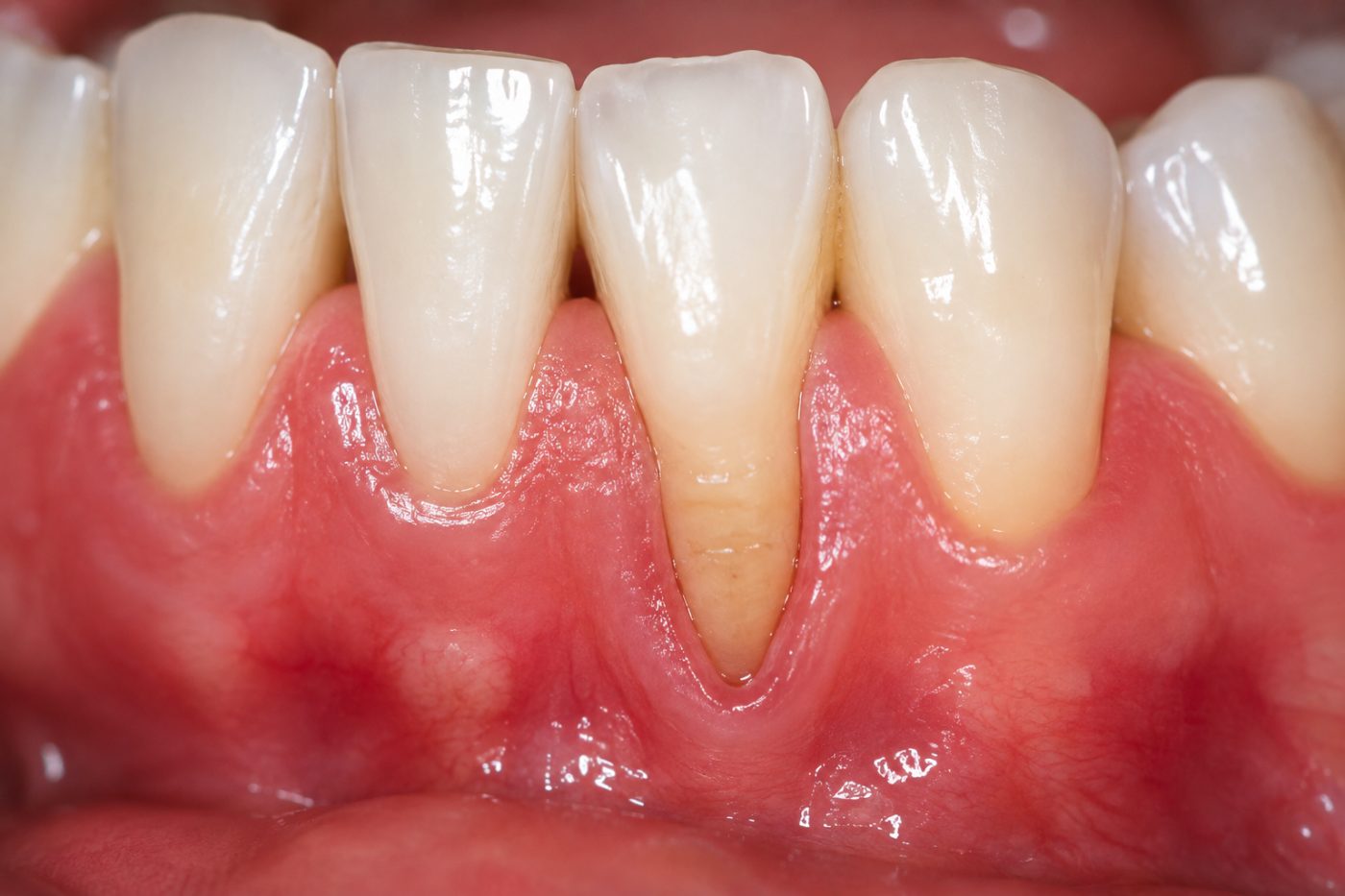
In short: Gum tissue that has already receded does not grow back on its own. But recession can be stopped from getting worse by treating its cause, and in some cases the lost gum can be restored with a gum graft. The priority is to halt further recession early and protect the exposed tooth.
Gum recession — where the gum pulls back and exposes more of the tooth or its root — is common. The honest answer to whether it reverses is: the gum that’s already lost won’t regrow by itself. But that’s not the whole story, and there’s a lot that can be done.
First, the most important step is to stop it progressing. Recession is usually caused by one or more of:
- Brushing too hard or with a hard-bristled brush.
- Gum disease, which destroys the supporting tissue.
- Grinding/clenching, misaligned teeth, or tobacco use.
Identifying and fixing the cause — switching to gentle brushing with a soft brush, treating gum disease, or addressing grinding — halts the recession and protects the tooth. Exposed roots can be sensitive and more prone to decay, so this protection matters.
Second, where recession is significant or causing problems, a dentist can restore lost gum with a gum graft, taking a small amount of tissue (often from the roof of the mouth) to cover the exposed root. This is done for sensitivity, decay risk, or appearance.
So while receding gums don’t reverse on their own, you’re far from helpless: the key is acting early to stop the cause, then restoring where needed.
If your gums are receding or your teeth feel sensitive at the gumline, a gum assessment and treatment will identify the cause and protect your teeth.