In short: Most shop-bought whitening kits are relatively safe but weak, so results are limited and slow. The bigger concern is DIY trends — charcoal, lemon, baking soda — which can erode enamel, and ill-fitting trays that irritate gums. Professional whitening is stronger, faster, more even and safely supervised.
Over-the-counter whitening products — strips, gels, trays, whitening toothpastes — are widely available, and the honest answer on safety is: the regulated kits are generally safe but limited, while some DIY methods are genuinely risky.
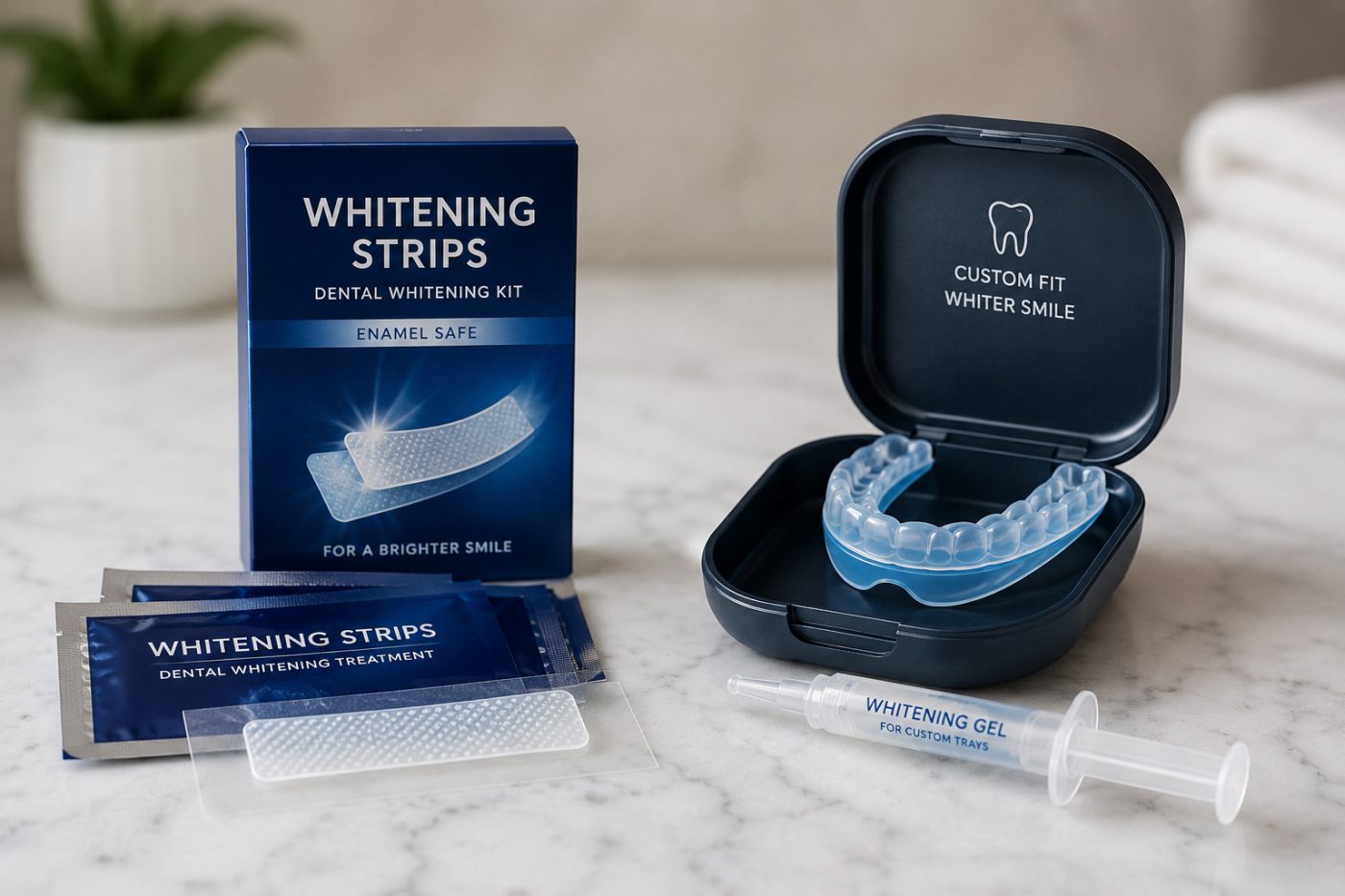
Shop-bought kits (strips, low-strength gels):
- They contain low concentrations of whitening agent, so they’re mild — which also means results are modest and slow, and often uneven, as one-size trays don’t fit every mouth.
- The main downsides are tooth sensitivity and gum irritation where gel contacts the gums, especially with poorly fitting trays.
- Whitening toothpastes only remove surface stains and can be abrasive if used aggressively.
DIY “natural” trends — approach with caution:
- Charcoal, baking soda used hard, lemon juice or vinegar are popular online but can be abrasive or acidic and erode enamel — causing lasting damage and, ironically, more yellowing as enamel thins.
Why professional whitening is the safer bet: a dentist checks your teeth are healthy first (whitening over cavities or gum disease is a bad idea), uses stronger, controlled gels with custom-fitted trays, and manages sensitivity — giving better, more even, longer-lasting results safely.
If you want a noticeably brighter smile without the guesswork or risk, book a professional teeth whitening consultation with us.