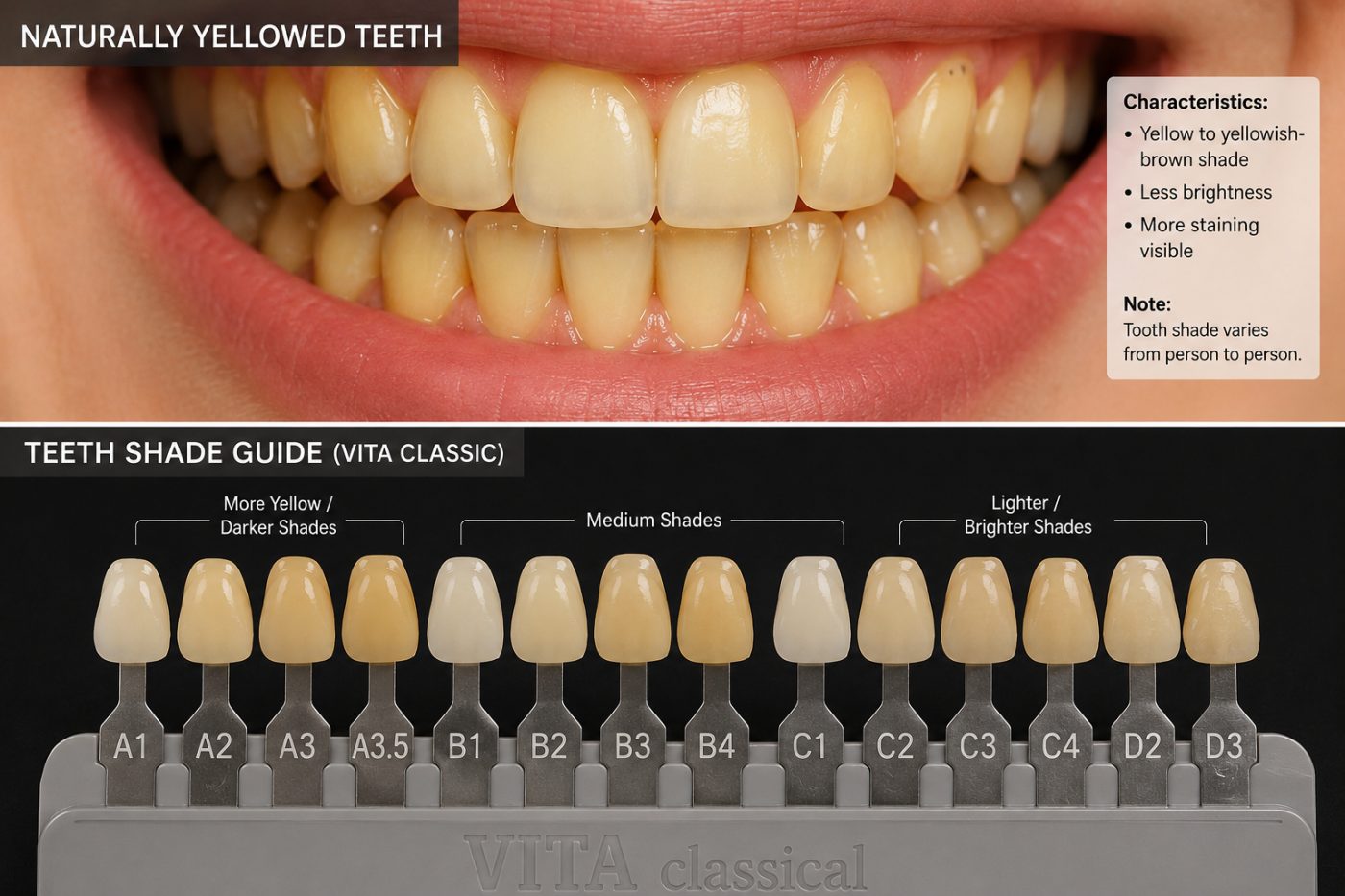
In short: Brushing removes surface plaque but can’t change your teeth’s inner colour. Teeth look yellow mainly because the outer enamel naturally thins with age, letting the yellowish layer beneath show through — plus staining from tea, coffee, tobacco and certain foods. Professional whitening is what actually lightens the shade.
It’s a common frustration: you brush faithfully, yet your teeth still look yellow. The reason is that toothbrushing and tooth colour are two different things. Brushing removes plaque and food debris to keep teeth healthy and clean — but the underlying shade of your teeth isn’t controlled by how well you brush. Several things determine it:
- Natural ageing. The white outer enamel gradually thins over the years, and beneath it lies dentine, which is naturally yellow. As enamel thins, more of that yellow shows through. This is the biggest reason.
- Staining from food and drink. Tea, coffee, red-coloured curries, cola and red wine deposit stains within the enamel over time.
- Tobacco and gutka, which stain teeth quickly and stubbornly.
- Genetics. Some people simply have naturally more yellow or more grey enamel.
- Thin enamel from acidic diets or grinding.
So yellowing isn’t a sign you’re brushing badly — it’s mostly natural and stain-related. The good news is it’s very treatable. Everyday habits (cutting back on staining drinks, rinsing with water, not smoking) slow new staining, but to actually lighten teeth you need professional whitening, which breaks down the built-up stains from inside the tooth.
If your smile looks duller than you’d like, book a professional teeth whitening consultation and we’ll advise the safest way to brighten it.