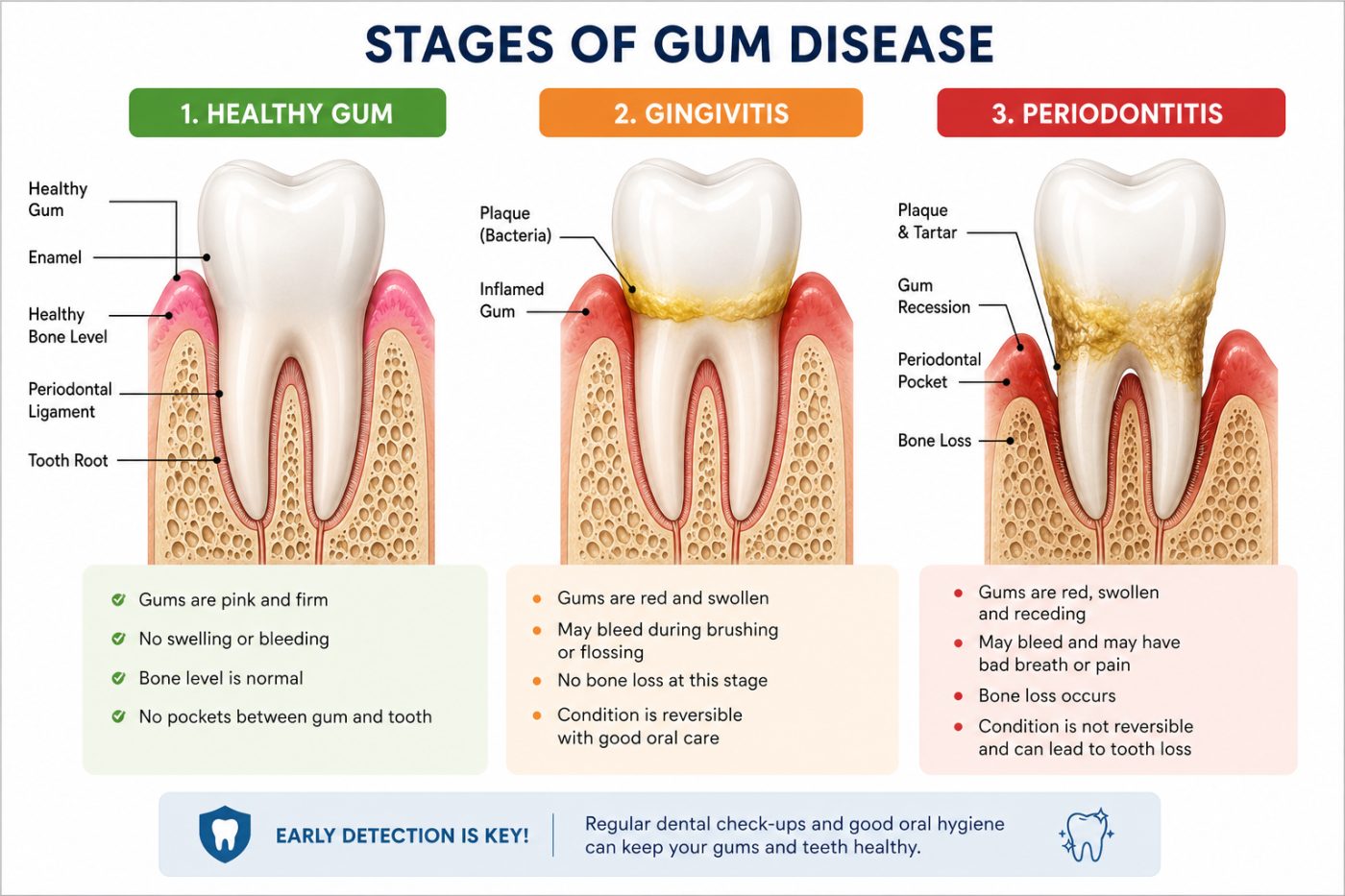
In short: Gingivitis is early gum disease — inflammation of the gums only, and fully reversible. Periodontitis is the advanced stage, where the infection spreads below the gums and destroys the bone that holds teeth in place. That bone loss is permanent, so the goal is to treat gingivitis before it becomes periodontitis.
Gingivitis and periodontitis are two stages of the same disease — gum disease — but they are very different in seriousness.
Gingivitis is the early, mild stage. Plaque along the gumline inflames the gums, making them red, swollen and quick to bleed. Crucially, the damage is limited to the soft gum tissue. There’s no harm yet to the bone, and with good cleaning and a professional scaling it heals completely.
Periodontitis is what gingivitis can become if it’s left untreated. The infection spreads below the gumline and triggers a process that destroys the bone and fibres anchoring your teeth. Pockets form between the gums and teeth that trap more bacteria, the gums recede, and over time the teeth loosen and can eventually be lost. Unlike gingivitis, the bone that’s lost does not grow back — treatment can only halt the damage and stabilise things, not reverse it.
Warning signs that gum disease may have progressed to periodontitis include persistent bad breath, receding gums, teeth that look longer, gaps opening up, and teeth that feel loose.
The practical message is simple: gum disease is far easier and cheaper to treat the earlier you catch it. Regular check-ups spot it before real damage is done.
If you have any of these signs, don’t wait — a gum disease assessment and treatment can stop it in its tracks.