In short: Wipe your baby’s gums after feeds even before teeth appear. Once teeth come through, brush twice a day with a rice-grain (under 3) or pea-sized (3–6) smear of fluoride toothpaste. Never put your baby to bed with a milk bottle, limit sugar, and book a first dental visit by age one.
Caring for baby teeth matters just as much as caring for adult teeth — they hold space for the permanent teeth, help your child eat and speak, and decay in them can be painful and cause infection. The good news is that it’s simple once you know the essentials.
Start before the first tooth. Even before teeth appear, wipe your baby’s gums with a clean, damp cloth after feeds to clear milk residue and get them used to mouth care.
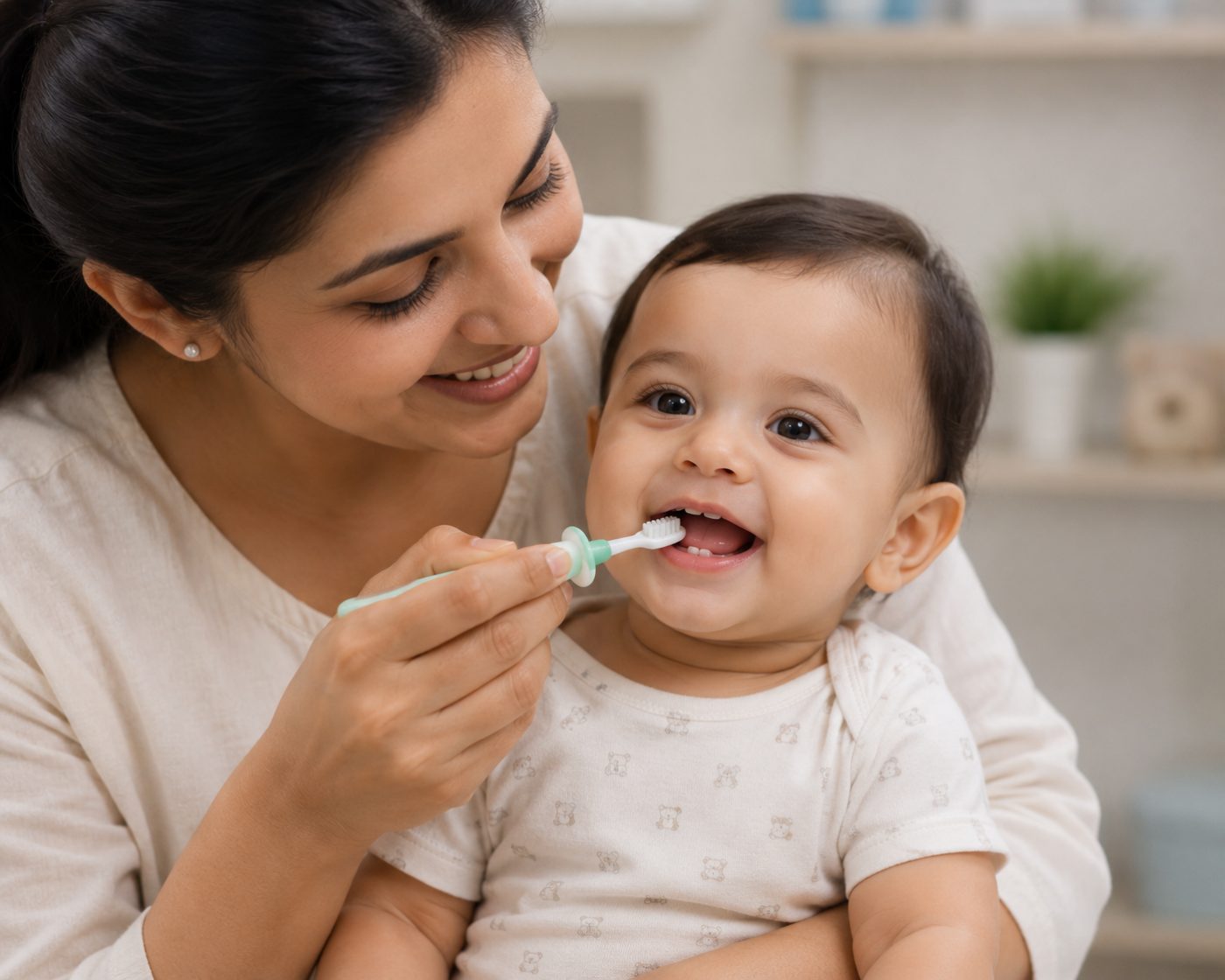
Once the first tooth appears, start brushing. Use a small, soft baby toothbrush twice a day — most importantly at night. For children under 3, use only a tiny smear (rice-grain size) of fluoride toothpaste; from age 3–6, a pea-sized amount. Brush gently in small circles, covering all surfaces, and help them until they’re old enough to do it well themselves (usually around age 7).
Beware the bottle at bedtime. Never put your baby to sleep with a bottle of milk, formula or any sweet drink. Milk pooling around the teeth overnight is a leading cause of severe early decay, sometimes called “bottle caries.” If a comfort bottle is needed, make it plain water.
Watch the sugar. Avoid sweetened drinks, and don’t dip soothers in honey or sugar. Introduce a cup instead of a bottle from around age one.
First dental visit by age one. A dentist can spot problems early and guide you.
If you notice any white or brown spots on your baby’s teeth, don’t wait — book a children’s check-up so we can help early.