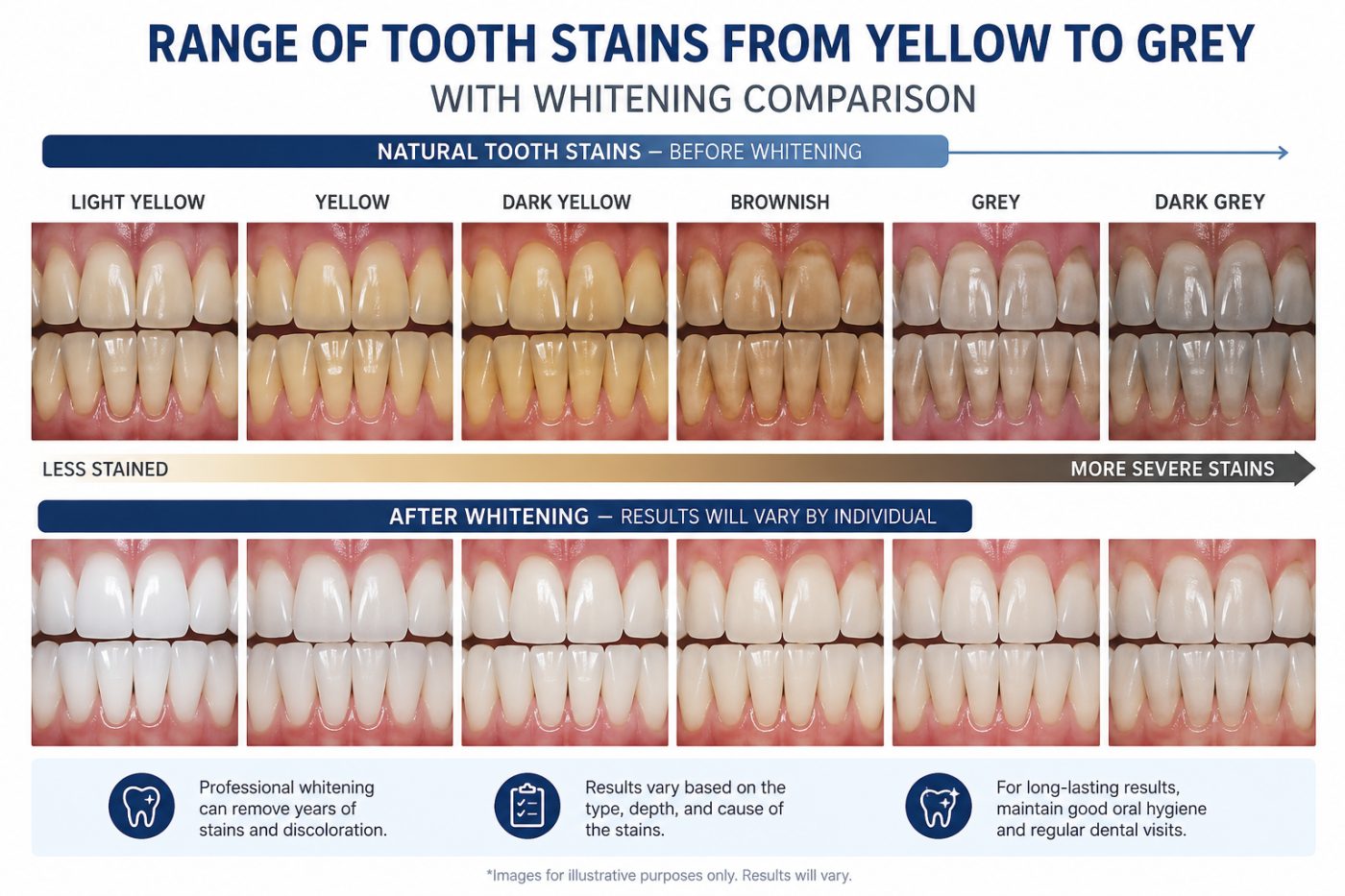
In short: Most stained teeth can be whitened, especially yellow-brown staining from food, drink, tobacco and age, which responds well. Deeper or greyish discolouration — from certain medicines, injury or a dead tooth — is harder to whiten and may need veneers or bonding instead. A dentist can tell you which type you have.
Whether staining can be whitened depends on the type of discolouration, so it helps to understand the two broad kinds:
- Surface and age-related staining (extrinsic + typical yellowing). This is the common kind — from tea, coffee, red foods, tobacco, and the natural yellowing of enamel with age. It responds very well to professional whitening, which breaks down the stain build-up and lightens the teeth by several shades.
- Deep, internal discolouration (intrinsic). This includes greyish or banded staining from certain antibiotics taken in childhood (like tetracycline), too much fluoride during development, injury to a tooth, or a tooth whose nerve has died and darkened. These are harder to whiten and respond less predictably. Sometimes internal whitening of a single dead tooth works; in other cases the better result comes from veneers or bonding to cover the discolouration.
There are also things whitening simply won’t change — crowns, veneers and fillings don’t lighten, so existing dental work may need replacing to match a whitened smile.
The practical step is an assessment: a dentist can identify what’s causing your discolouration and tell you honestly whether whitening will work well, or whether another option would give a better result.
Book a teeth whitening consultation and we’ll assess your staining and recommend the most effective approach.