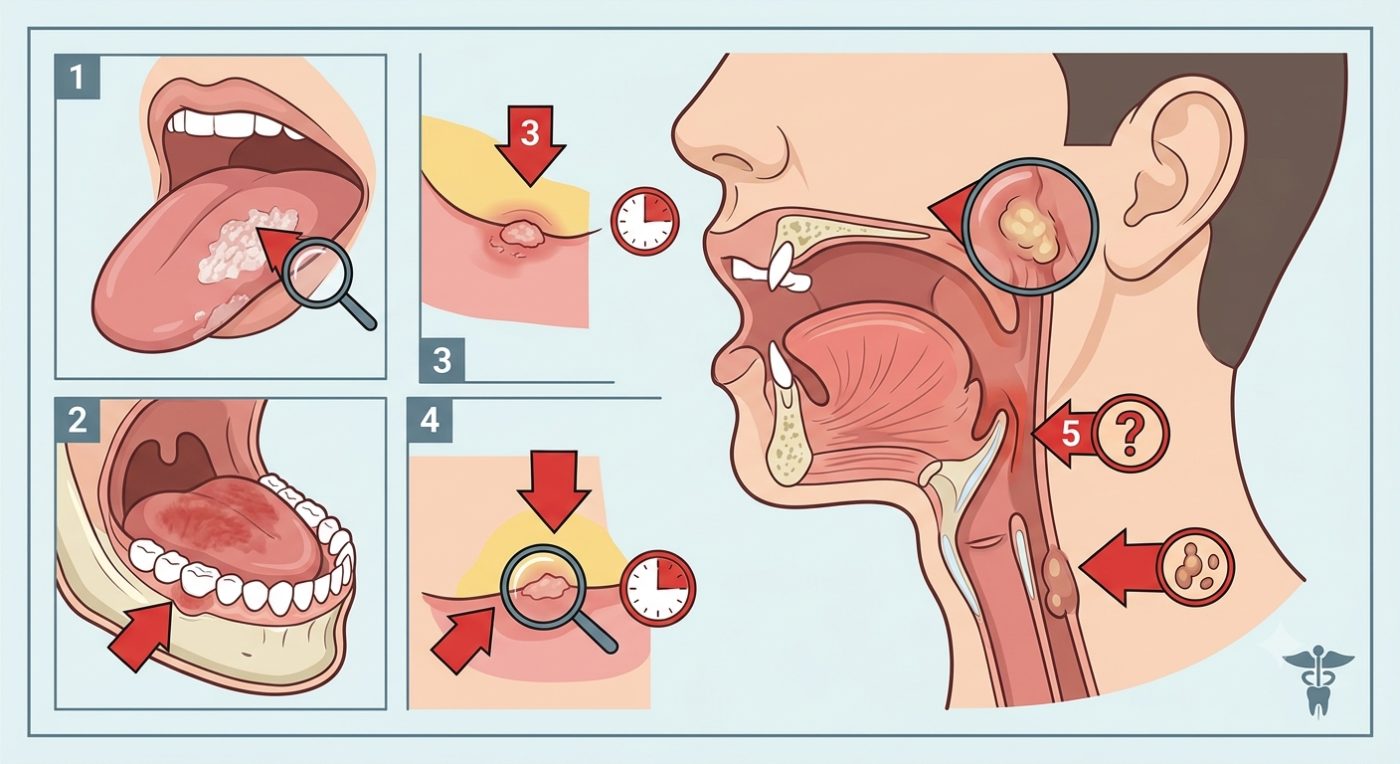
In short: Early signs of oral cancer include a mouth ulcer or sore that doesn’t heal within 2–3 weeks, a red or white patch, a lump or thickening, unexplained bleeding, numbness, difficulty swallowing, or a persistent sore throat. Anything unusual lasting more than three weeks should be checked promptly — early detection saves lives.
Oral cancer is far more treatable when caught early, so knowing the warning signs — and acting on them quickly — genuinely saves lives. See a dentist or doctor promptly if you notice any of these lasting more than 2–3 weeks:
- A mouth ulcer or sore that doesn’t heal within a couple of weeks — the most common warning sign.
- A red or white patch on the gums, tongue, cheek or floor of the mouth.
- A lump, swelling or thickening anywhere in the mouth, or on the lip or neck.
- Unexplained bleeding, numbness or persistent pain in the mouth.
- A rough, crusted or eroded area, or a sore spot that keeps coming back.
- Difficulty or pain when swallowing, chewing or moving the jaw or tongue.
- A persistent sore throat, hoarseness, or a feeling that something is stuck.
- Loose teeth with no obvious dental cause, or dentures that suddenly don’t fit.
- Difficulty opening the mouth (linked to gutka/areca use).
Most such changes turn out to be harmless — but the only way to be sure is to have them checked, and early diagnosis dramatically improves the outcome. The risk is higher if you use tobacco, gutka or alcohol, so regular checks matter even more.
A dental check-up includes a quick oral-cancer look-over. If you’ve noticed anything persistent, don’t wait — book an oral cancer screening; it’s quick, painless, and could be life-saving.