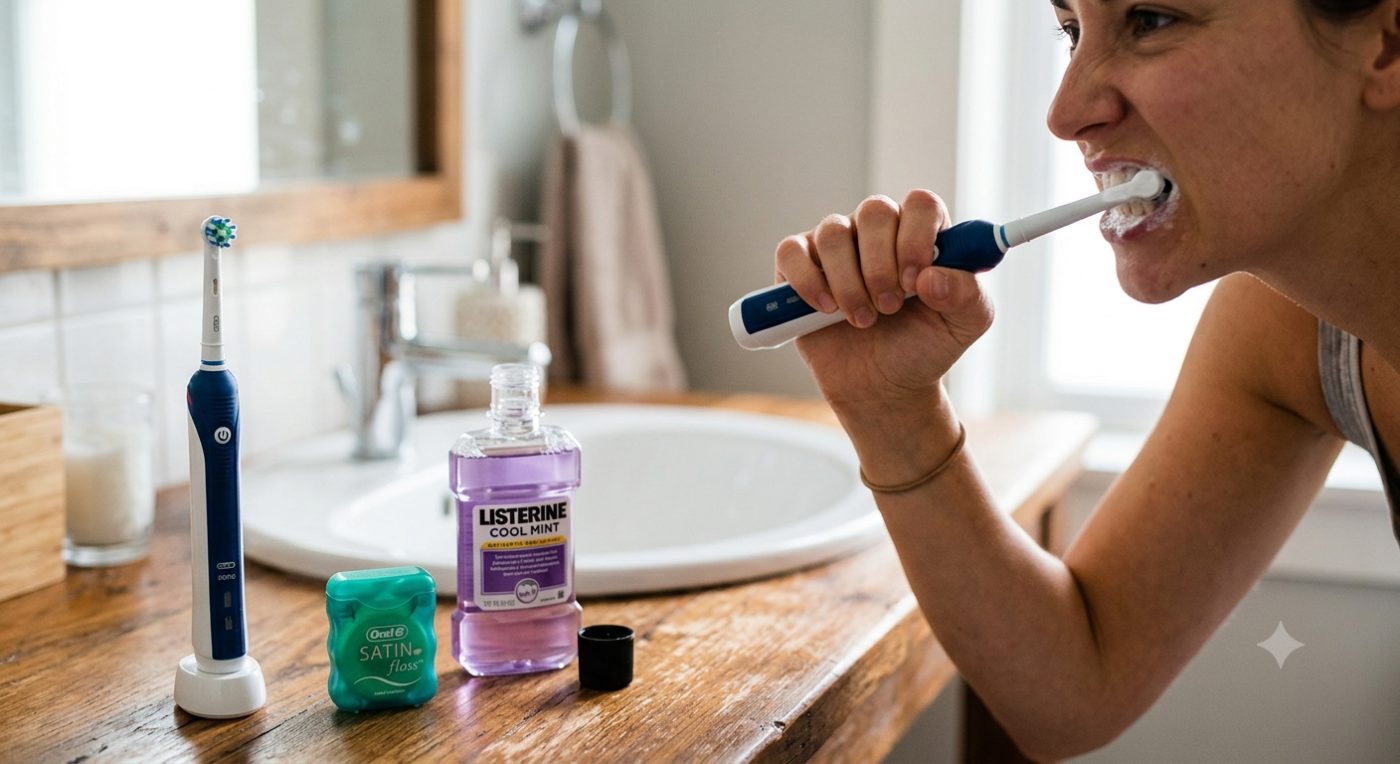
In short: Mouthwash is optional, not essential — brushing twice a day and cleaning between your teeth are what truly keep your mouth healthy. A fluoride or antibacterial mouthwash can be a helpful extra for fresh breath, extra fluoride or specific gum issues, but it never replaces brushing and flossing. Don’t rinse with it right after brushing.
Mouthwash is widely marketed, so it’s a fair question whether you actually need it. The honest answer: mouthwash is a useful optional extra, not a necessity, and it’s no substitute for brushing and cleaning between your teeth.
Here’s the reality:
- Brushing and interdental cleaning do the real work. They physically remove the plaque that causes cavities and gum disease. Mouthwash cannot remove plaque the way a brush and floss do — swishing a liquid doesn’t scrub it off.
- Where mouthwash can help (as an add-on):
- A fluoride mouthwash gives teeth extra protection against decay, useful for those at higher cavity risk.
- An antibacterial/antiseptic mouthwash can help manage gum inflammation or specific conditions, sometimes on a dentist’s advice.
- A rinse can freshen breath — though only temporarily, and it doesn’t cure the cause of bad breath.
A couple of practical tips: choose an alcohol-free option if mouthwash stings or dries your mouth, and importantly, don’t rinse with mouthwash straight after brushing — it washes away the concentrated fluoride from your toothpaste. Use it at a different time of day instead.
So keep brushing twice daily and cleaning between your teeth as your foundation, and add mouthwash only if it suits you or your dentist suggests it for a reason.
If you have persistent bad breath or gum issues that make you reach for mouthwash, book a check-up so we can treat the actual cause.