
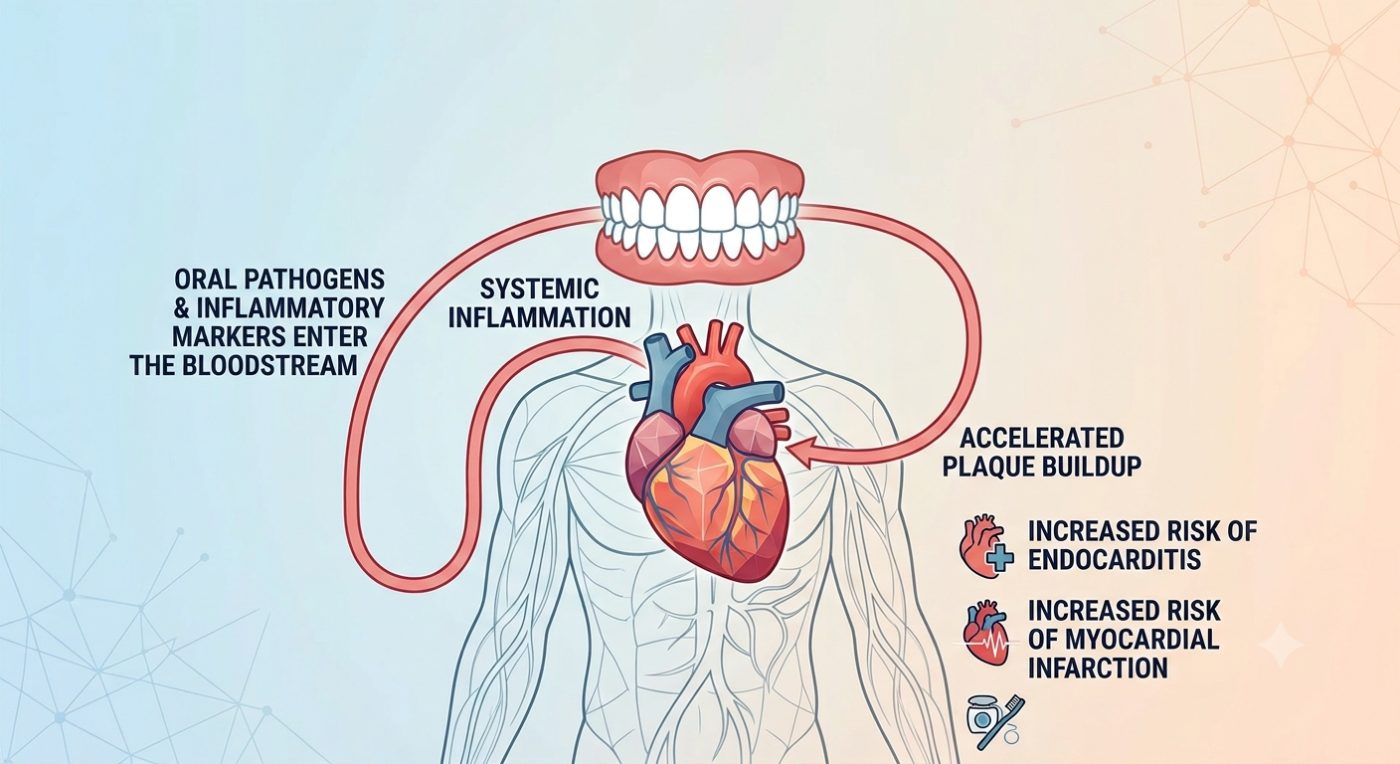
In short: Yes — research links poor oral health, especially gum disease, with a higher risk of heart disease and stroke, thought to be driven by chronic inflammation and bacteria entering the bloodstream. While brushing won’t replace heart care, keeping your gums healthy is a genuine part of looking after your heart and whole body.
The idea that your gums could affect your heart surprises many people, but there’s a well-established association between gum disease and cardiovascular disease (heart disease and stroke). It’s an important reason not to dismiss bleeding gums as trivial.
Here’s what the research suggests:
- People with gum disease have a higher rate of heart disease and stroke.
- The likely explanation is chronic inflammation: diseased gums keep the body in a low-grade inflammatory state, and inflammation plays a key role in the artery damage behind heart disease.
- Bacteria from infected gums can enter the bloodstream, contributing to inflammation in blood vessels, and in rare cases can affect the heart’s lining (a serious infection called endocarditis), which is why people with certain heart conditions take special care.
It’s important to be accurate: this is a strong association, and gum disease is considered a risk factor — it doesn’t mean gum disease alone causes heart attacks, and looking after your gums won’t replace managing blood pressure, cholesterol, diet and exercise. But keeping your mouth healthy removes one source of chronic inflammation and is a sensible part of whole-body health — the benefits clearly point one way.
The same simple habits protect both: brushing, cleaning between teeth, regular cleanings, not smoking, and treating gum disease early.
If your gums bleed or you have a heart condition, healthy gums matter even more. Book a gum health assessment — good for your mouth, and your heart.