
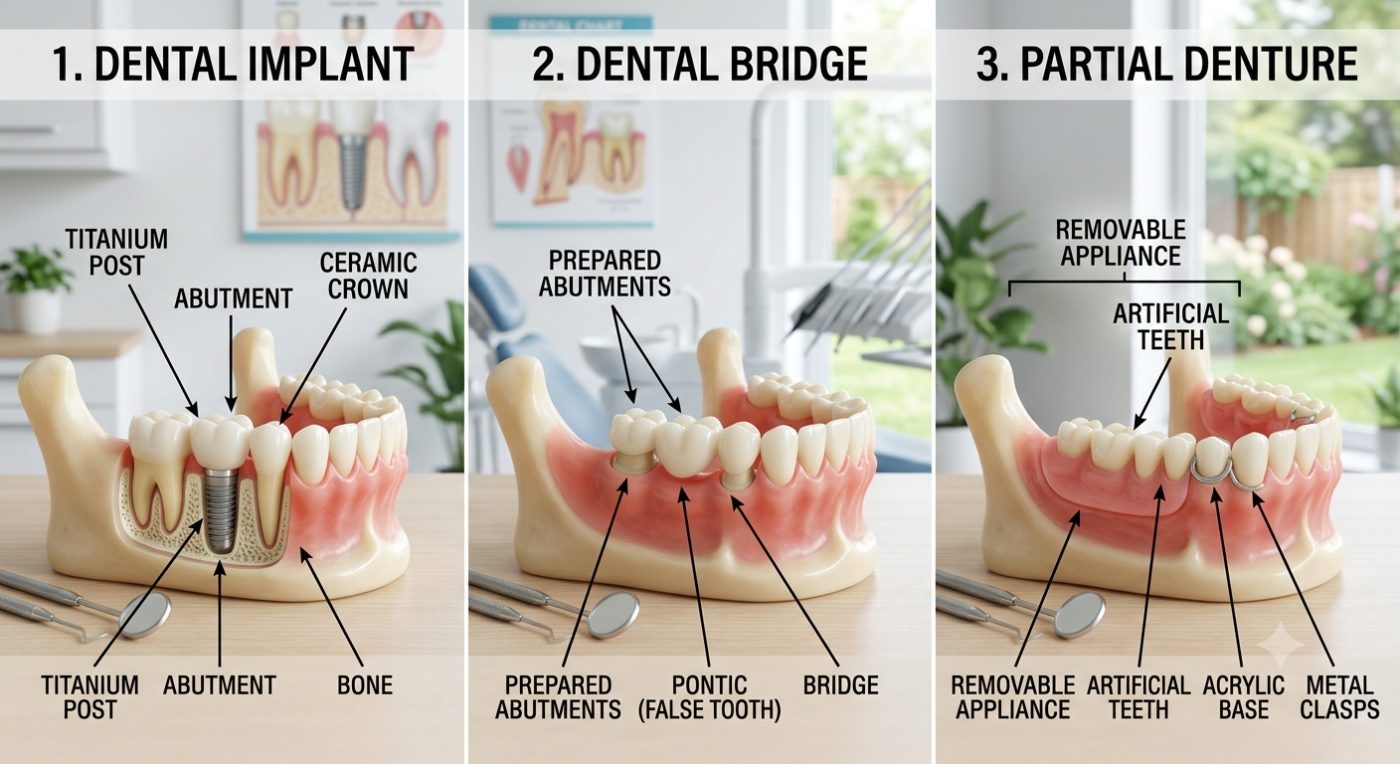
In short: The three main ways to replace a missing tooth are a dental implant (a titanium root plus a crown — the longest-lasting), a bridge (a false tooth anchored to neighbouring teeth), or a denture (a removable replacement). Implants are usually the best long-term option; the right choice depends on your teeth, bone, and budget.
Replacing a missing tooth matters for more than looks — it helps you chew and speak properly, stops other teeth drifting into the gap, and preserves the jawbone. There are three main options:
- Dental implant. A titanium post is placed in the jaw to act as a root, topped with a crown. It’s the closest thing to a natural tooth — the most stable and longest-lasting choice, and it doesn’t affect the neighbouring teeth. It also preserves the jawbone. It’s a bigger upfront investment and takes a few months to complete.
- Dental bridge. A false tooth is fixed in the gap by crowning the teeth on either side. It’s quicker than an implant and fixed (not removable), but it involves reshaping the adjacent healthy teeth, and doesn’t preserve the underlying bone.
- Denture (partial). A removable plate carrying one or more false teeth. It’s the most affordable and least invasive option, and useful when several teeth are missing, but it’s removable and less stable than fixed options.
Which is best depends on how many teeth are missing, the health of your remaining teeth and gums, how much bone you have, and your budget and preferences. For many people, an implant offers the best long-term value; for others, a bridge or denture is the right fit.
Book a tooth replacement consultation and we’ll walk you through the options honestly and help you choose.