
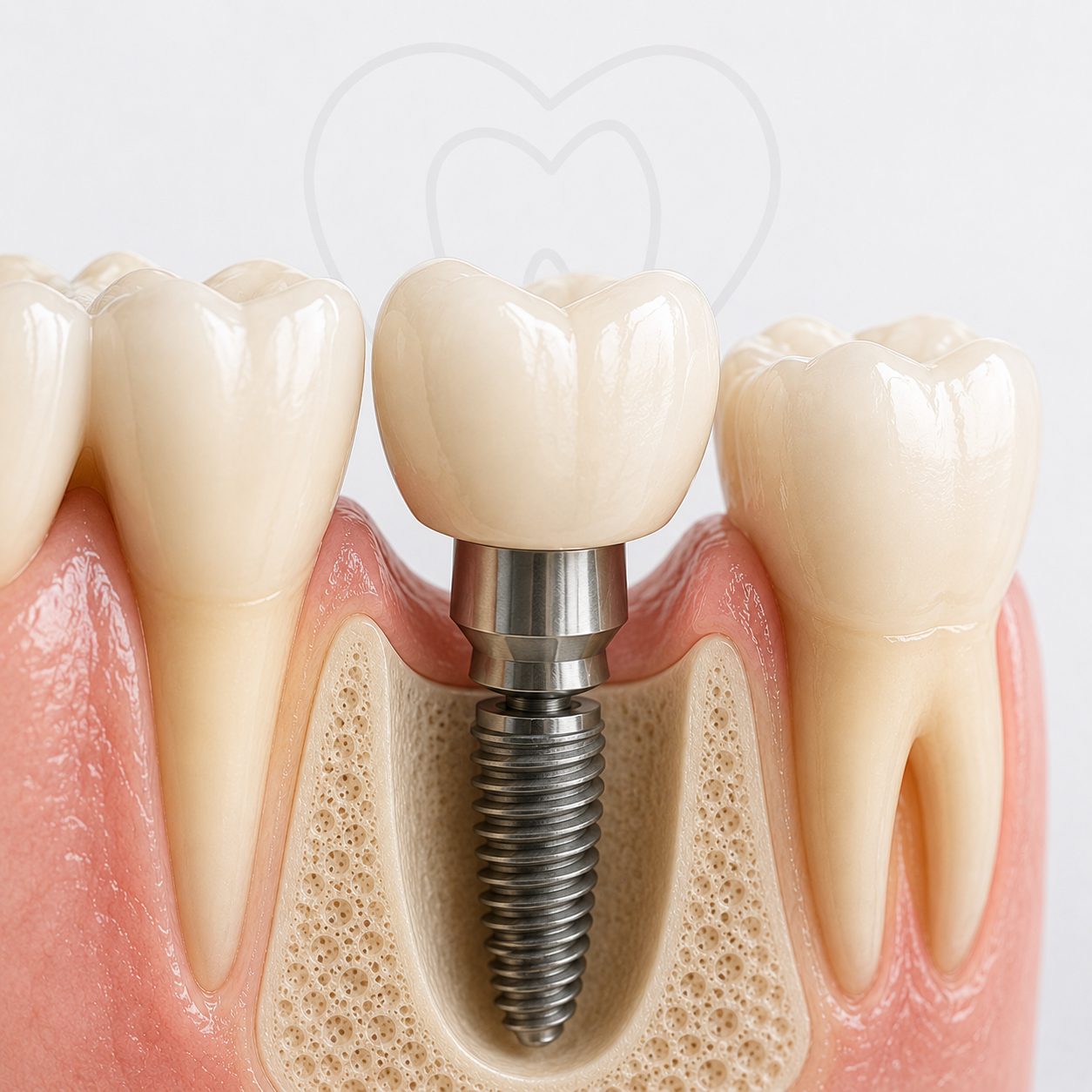
In short: A dental implant is a small titanium screw placed into the jawbone to replace the root of a missing tooth. The bone fuses to it over a few months, creating a solid foundation for a crown, bridge or denture on top. Implants look, feel and function like natural teeth and are the closest thing to getting a real tooth back.
A dental implant is the modern gold-standard for replacing missing teeth. It replaces not just the visible tooth but the root as well, which is what makes it so stable and long-lasting. It has three parts:
1. The implant — a small, biocompatible titanium screw placed into the jawbone, acting as an artificial tooth root. 2. The abutment — a connector fitted on top of the implant. 3. The restoration — the visible part: a crown (for one tooth), or a bridge or denture (for several teeth), attached to the abutment.
How it works: after the implant is placed into the bone (a minor procedure under local anaesthetic), the jawbone gradually fuses to the titanium over about 2–4 months — a natural process called osseointegration. This creates an incredibly strong, permanent foundation. Once healed, the crown or other restoration is fixed on top, giving you a replacement tooth that feels solid and works like your own.
The advantages are significant: implants look and feel natural, let you eat and speak normally, don’t rely on grinding down neighbouring teeth (as a traditional bridge does), and help preserve the jawbone, which otherwise shrinks when a tooth is lost.
If you’re missing one or more teeth, book a dental implant consultation and we’ll assess whether implants are right for you.