
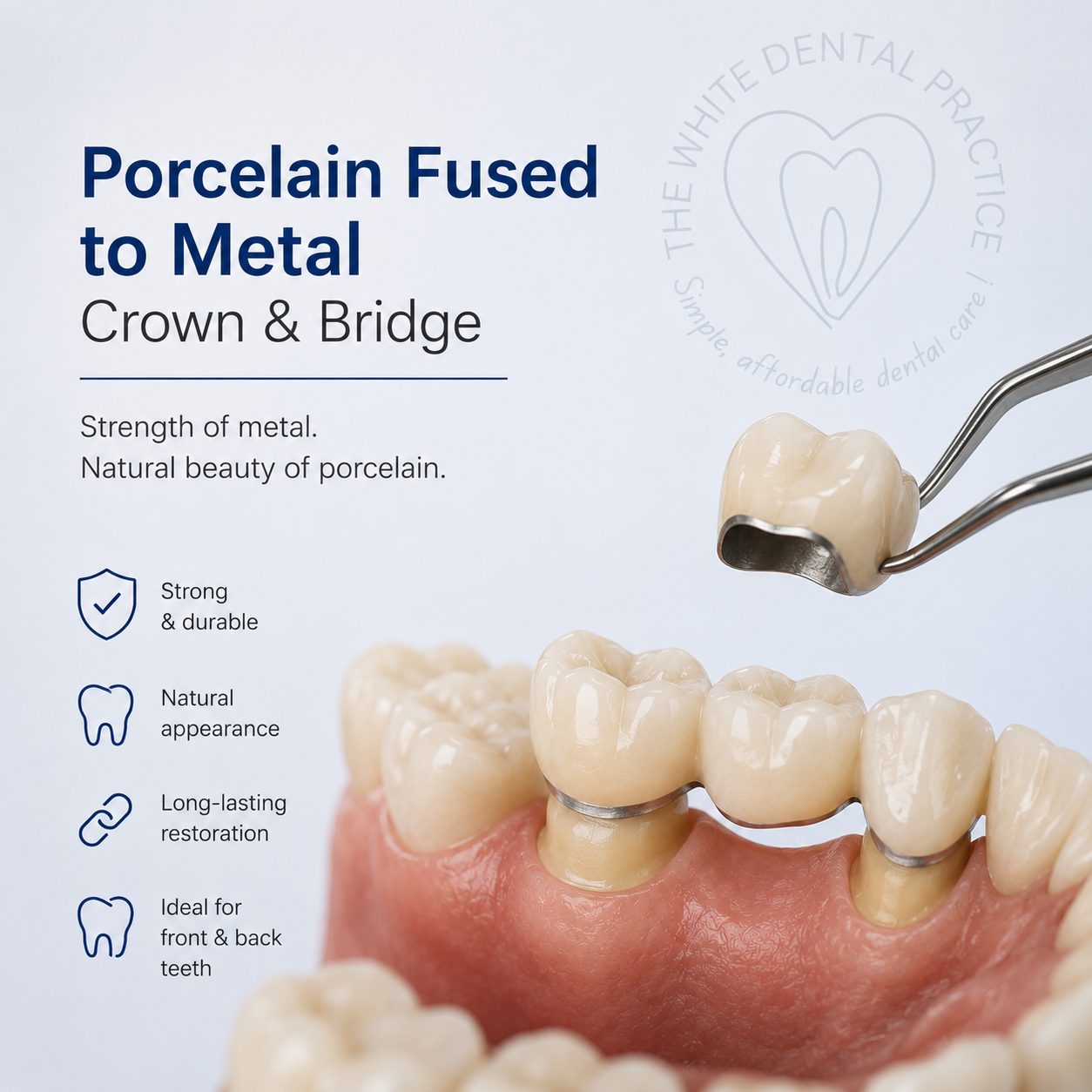
In short: A dental bridge replaces a missing tooth by fixing a false tooth to the natural teeth on either side, which are crowned to hold it. It’s a fixed (non-removable) option that restores your smile and bite, and typically lasts 10–15 years or more with good care.
A dental bridge is a fixed way to replace one or more missing teeth by “bridging” the gap. It consists of one or more false teeth (pontics) held in place by crowns fitted onto the healthy teeth on either side of the gap (or, in some designs, anchored to implants). Once cemented, it’s fixed in place — you don’t take it out.
A bridge is a good option because it:
- Restores your ability to chew and speak properly.
- Fills the gap so the smile looks complete.
- Stops neighbouring teeth drifting into the space and the bite changing.
- Is quicker than an implant and doesn’t involve surgery.
How long does it last? With good care, a bridge typically lasts 10–15 years, often longer. Its lifespan depends on:
- Oral hygiene — keeping the supporting teeth and gums healthy is crucial, especially cleaning under the false tooth with special floss or a small brush.
- Avoiding excessive force — not chewing very hard objects.
- Regular check-ups so any issue with the supporting teeth is caught early.
One consideration: making a traditional bridge involves reshaping the healthy teeth either side to take the crowns, which is irreversible. Where preserving those teeth matters, an implant may be the better long-term choice — something a dentist can advise on.
To find out whether a bridge is right for replacing your missing tooth, book a consultation with us.