
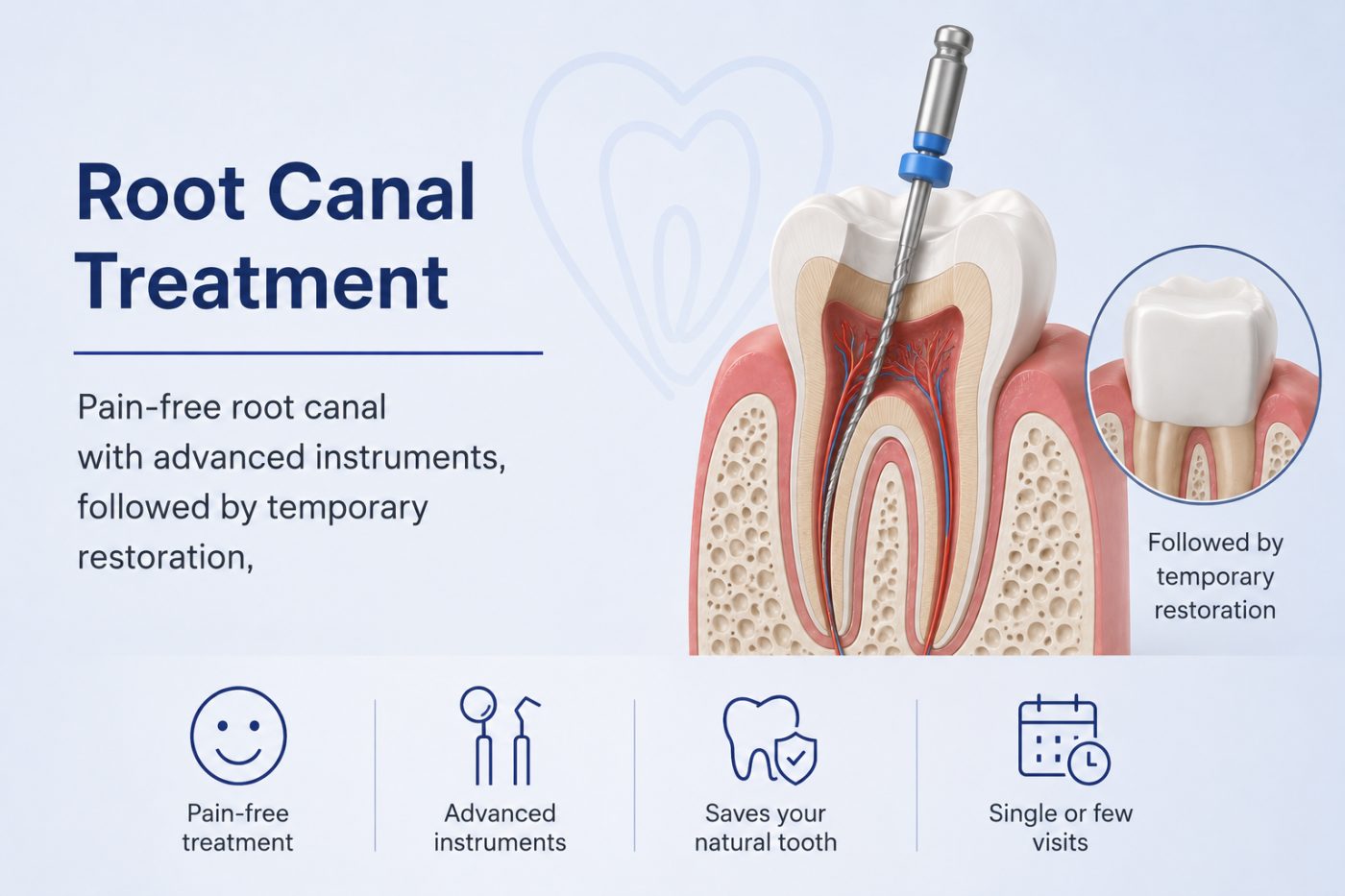
In short: A root canal treats infection or damage inside a tooth by removing the inflamed or infected nerve (pulp), cleaning and disinfecting the inside, and sealing it. It relieves pain and saves a tooth that would otherwise need removing. You need one when decay, a crack or injury has reached the nerve.
A root canal (endodontic treatment) is the procedure that saves a tooth when the soft tissue inside it — the pulp, which contains the nerve and blood vessels — becomes infected or inflamed. Rather than removing the whole tooth, a root canal removes just the damaged pulp and keeps your natural tooth in place.
Why the pulp gets damaged, and why you’d need a root canal:
- Deep decay that reaches through the tooth to the nerve.
- A cracked or broken tooth that exposes the pulp.
- Repeated dental work on a tooth, or a deep filling close to the nerve.
- Injury to the tooth, even without a visible crack.
Once the pulp is infected, it doesn’t heal on its own — the infection can spread, cause an abscess, and lead to severe pain and swelling. At that point the choice is a root canal to save the tooth, or extraction.
What the treatment involves: under local anaesthetic, the dentist removes the infected pulp, thoroughly cleans and disinfects the inside of the tooth and its root canals, and then fills and seals them. A crown is usually placed afterwards to protect the tooth. This relieves the pain and lets you keep a tooth that would otherwise be lost.
If you have a deep cavity, ongoing toothache or a tooth infection, book an appointment — a root canal treatment can save the tooth and end the pain.