
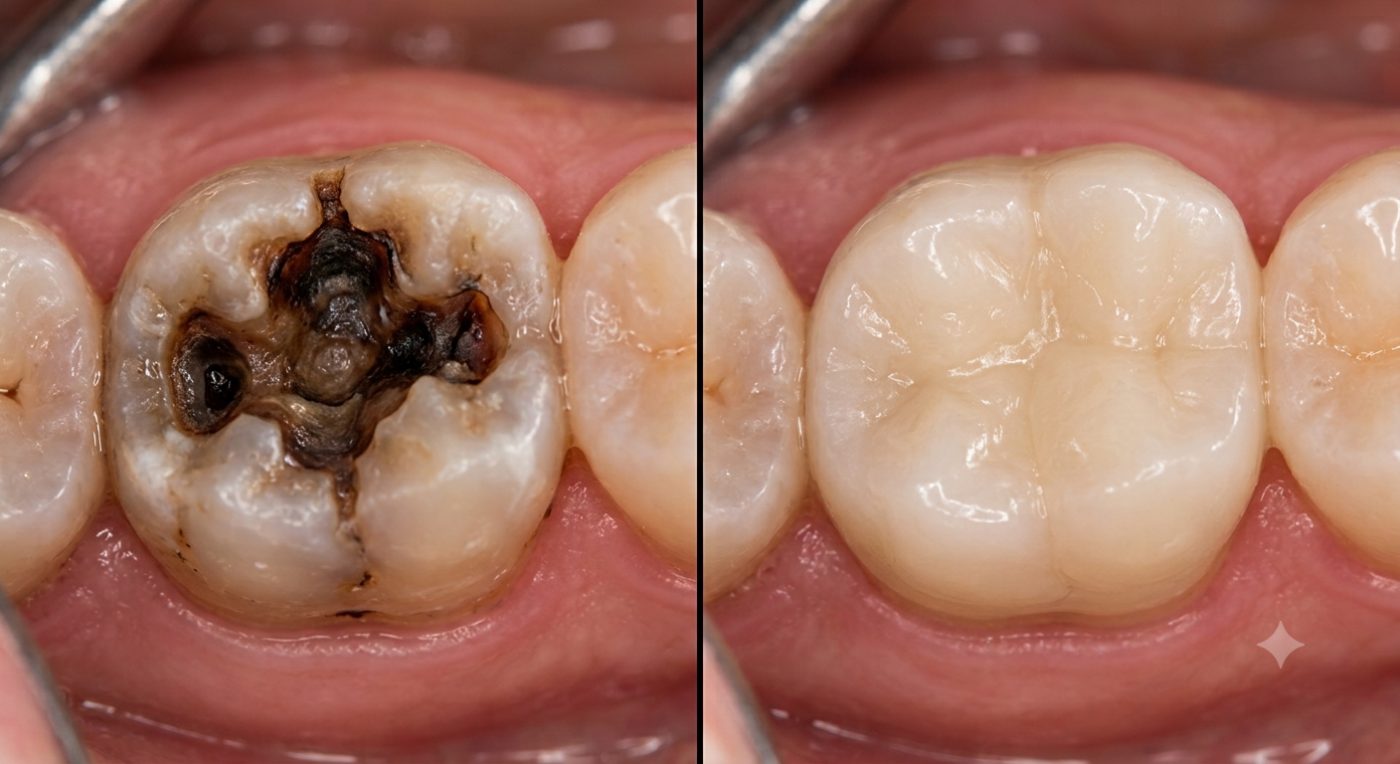
In short: A filling repairs a tooth damaged by decay — the dentist removes the decay and fills the space to restore the tooth’s shape and function. Tooth-coloured (composite) fillings typically last 5–10 years and silver (amalgam) ones 10–15+, but lifespan depends on the filling’s size, its location, and how well you look after your teeth.
A dental filling is one of the most common dental treatments. When a cavity forms, the dentist removes the decayed part of the tooth and “fills” the cleaned-out space with a restorative material, sealing it and restoring the tooth’s normal shape, strength and function so you can bite and chew properly.
How long a filling lasts depends on the material and several other factors:
- Tooth-coloured composite fillings — the popular natural-looking choice — typically last around 5 to 10 years.
- Silver amalgam fillings are very hard-wearing and often last 10 to 15 years or more.
- Gold or ceramic inlays can last even longer.
Beyond the material, lifespan is affected by:
- The size and location — large fillings and those on heavy-chewing back teeth wear faster.
- Your oral hygiene — good brushing and flossing prevent new decay around the filling.
- Habits like grinding or chewing hard objects, which can crack or wear fillings.
No filling lasts forever — they eventually wear, chip or leak at the edges, which is why the dentist checks them at every visit and replaces them before decay creeps back underneath.
If you have a cavity or a worn old filling, book an appointment for a natural-looking tooth-coloured filling to restore the tooth.