
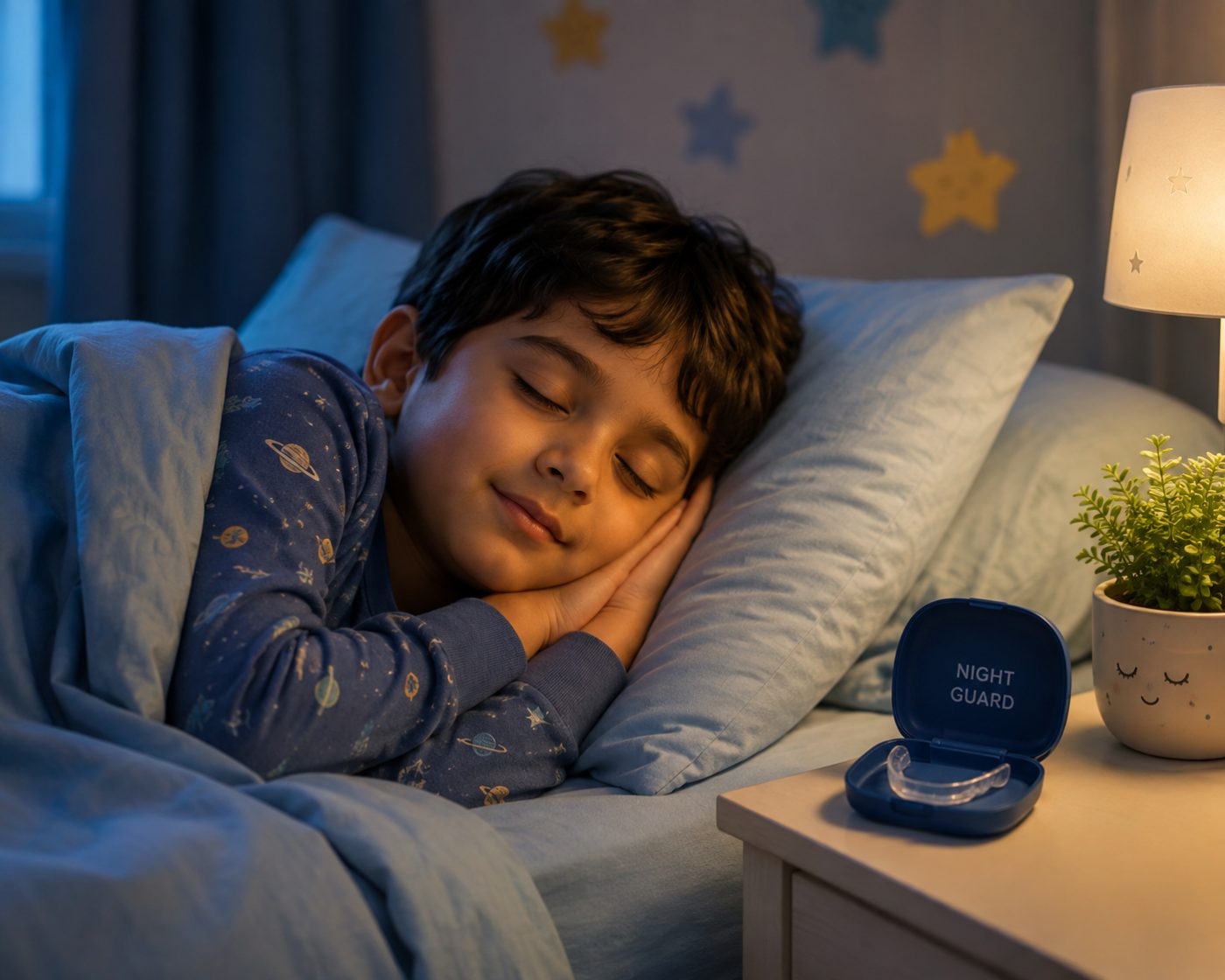
In short: Night-time grinding (bruxism) is common in young children and usually outgrown with no lasting harm, so occasional grinding with no pain just needs monitoring. See a dentist if you notice worn or chipped teeth, jaw pain or headaches — a soft night guard may help. Calm bedtimes and good rest reduce it.
Night-time teeth grinding — called bruxism — is very common in children, and in most cases it’s not a cause for serious worry. Many children grind their teeth during sleep at some point, especially between the ages of 3 and 6, and the large majority outgrow it naturally by the time their permanent teeth are well established, with no lasting harm.
Why do children grind? The exact cause isn’t always clear, but common factors include:
- teething or the discomfort of new teeth coming through,
- the upper and lower teeth not yet meeting evenly as the mouth grows,
- stress, anxiety or over-tiredness,
- and sometimes blocked airways from enlarged tonsils/adenoids or a cold.
When it’s usually harmless: occasional grinding in a young child, with no pain and no visible damage, typically just needs monitoring. It often settles on its own.
When to see a dentist: book a visit if you notice worn-down, chipped or flattened teeth, if your child complains of jaw pain, headaches or tooth sensitivity, or if the grinding is frequent, loud and persistent — especially in an older child. The dentist will check for tooth wear and bite problems and, in some cases, may recommend a soft night guard to protect the teeth while the habit passes.
You can also help at home by keeping a calm bedtime routine, addressing any stress or anxiety, and ensuring your child is well-rested and hydrated.
If you’re seeing signs of tooth wear or your child is in discomfort, don’t guess — book a children’s check-up and we’ll take a proper look.