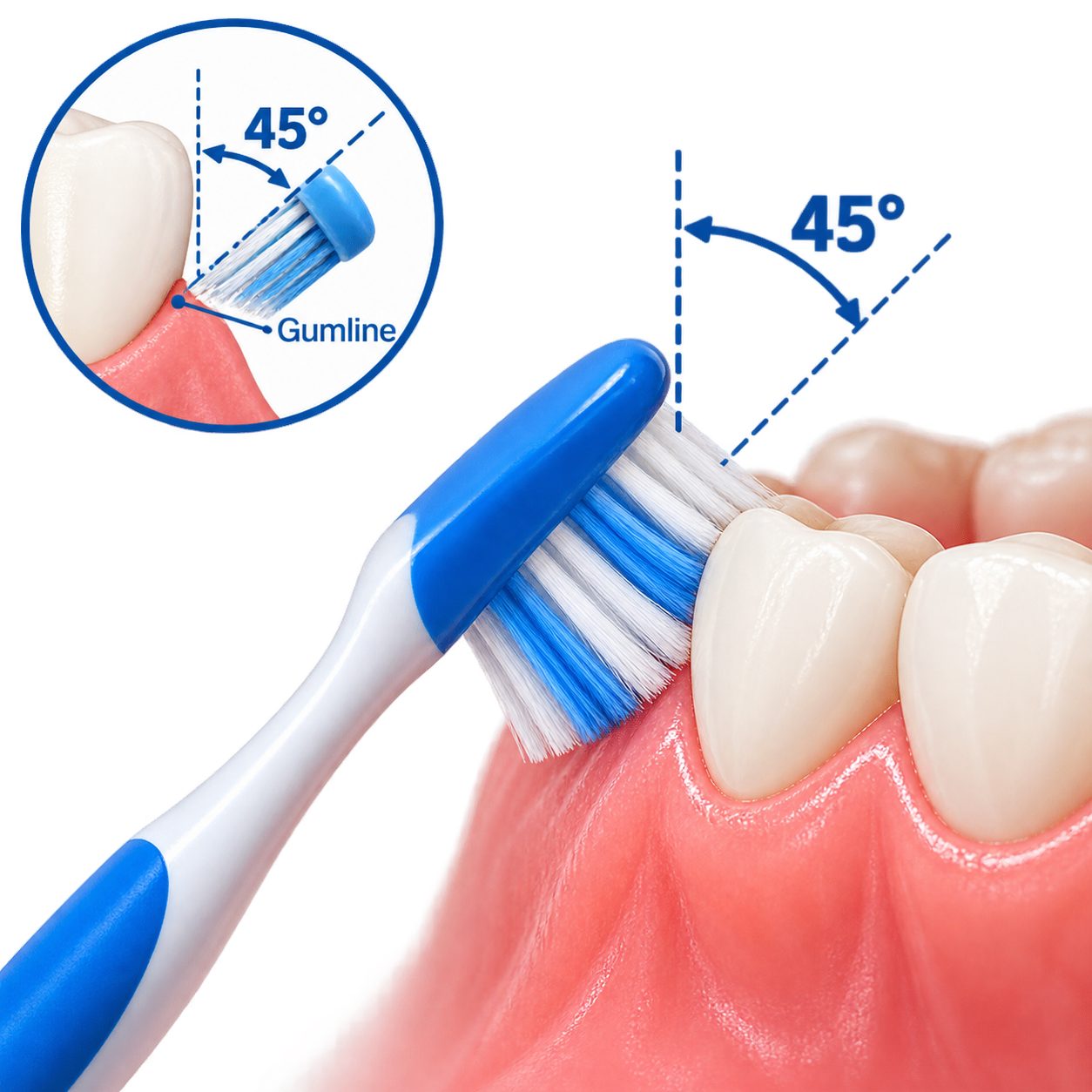
In short: Angle the brush at 45° to the gumline, use gentle short strokes, and brush for two minutes twice a day — especially at night. Use a soft brush and a pea-sized amount of fluoride toothpaste, and don’t scrub hard. At night, spit but don’t rinse, and clean between your teeth once a day.
Good brushing is about technique and time, not force. Here’s the method dentists recommend.
Angle the brush at 45 degrees to the gumline, so the bristles reach the spot where tooth meets gum — that’s where plaque collects. Use gentle, short strokes or small circular motions. Brush the outer surfaces, the inner surfaces, and the chewing surfaces of every tooth, and don’t forget the tongue-side of your lower front teeth, a commonly missed area.
Brush for two full minutes, twice a day — morning and, most importantly, last thing at night before bed. Splitting your mouth into four sections and giving each thirty seconds helps you cover everything.
Use a soft-bristled brush and only a pea-sized amount of fluoride toothpaste. Hard bristles and hard scrubbing don’t clean better — they wear away enamel and cause the gums to recede over time. Let the bristles and toothpaste do the work, not your arm.
After brushing at night, spit — don’t rinse with lots of water. Leaving a thin film of fluoride on the teeth gives it more time to protect against decay.
Two extra habits matter: clean between your teeth once a day with floss or an interdental brush, because a toothbrush can’t reach the surfaces between teeth, and wait about 30 minutes to brush after acidic food or vomiting, as enamel is temporarily softened and brushing too soon can wear it.
If you’re not sure whether your technique is doing the job, we’re happy to check it and show you at your next check-up.