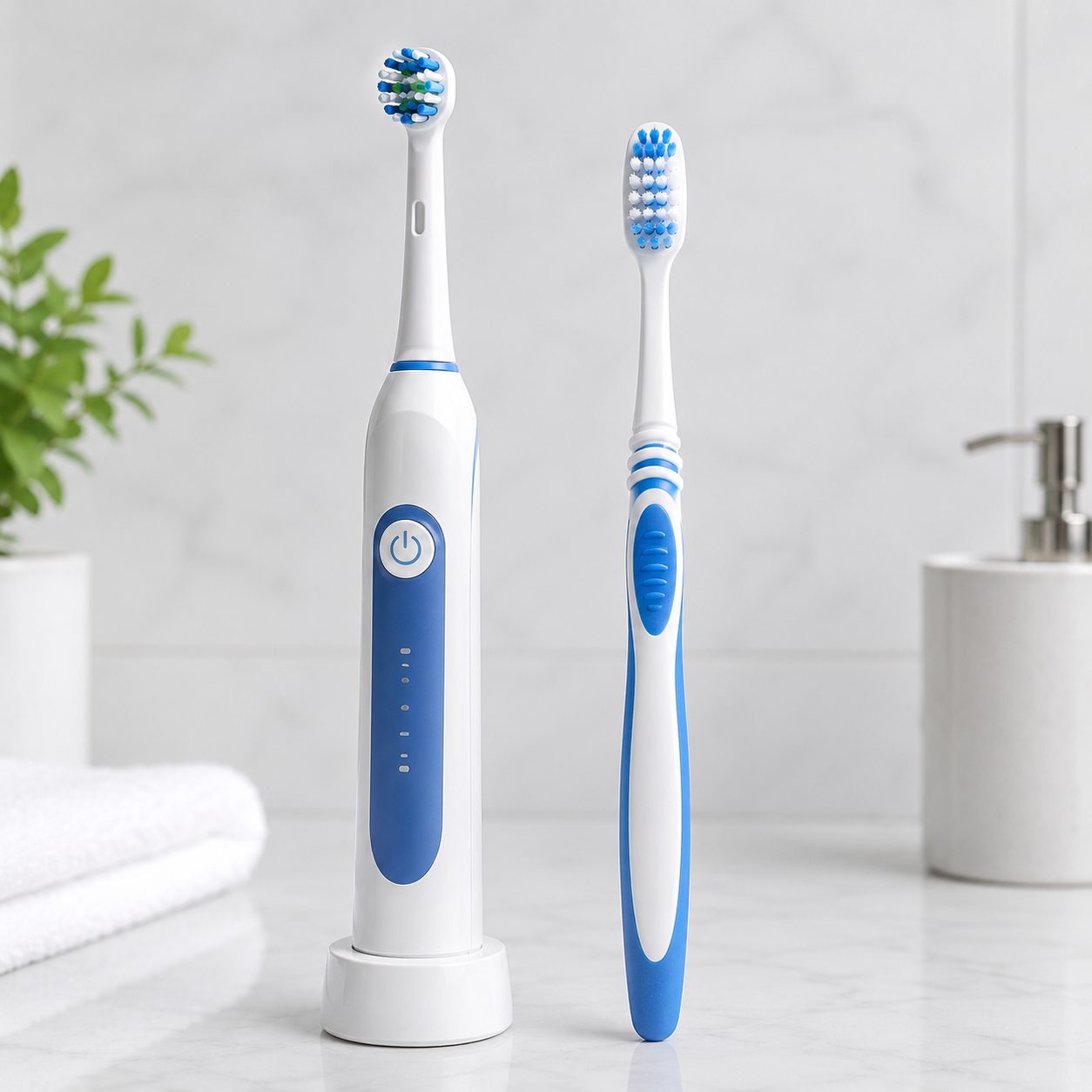
In short: An electric brush can remove a little more plaque, and its built-in timer helps you brush long enough — genuinely useful for hard brushers, kids, braces-wearers, or anyone with limited hand movement. But a manual brush used with good technique works well too. The best brush is the one you use properly.
An electric toothbrush can clean slightly better than a manual one for many people — but the honest answer is that a manual brush used with good technique is perfectly effective. The best toothbrush is the one you’ll use properly, twice a day, for two minutes.
Where electric brushes help is in doing the work for you. The vibrating or rotating head produces thousands of movements a minute, which can remove a bit more plaque, and most models have a built-in two-minute timer so you brush long enough. That combination makes them genuinely useful for certain people:
- Anyone who tends to brush too hard — many electric brushes have a pressure sensor that warns you.
- People with limited hand movement — arthritis, injury, or older age.
- Children and teenagers, who often brush too quickly; the timer helps.
- Those wearing braces, which are fiddly to clean by hand.
For a healthy adult with good technique, though, the difference is small. You do not need to spend on an electric brush to have a healthy mouth. What matters far more than electric-versus-manual is: brushing for the full two minutes, reaching the gumline, using a soft brush gently, cleaning between the teeth daily, and using fluoride toothpaste.
If you do choose electric, pick one with a soft head and a pressure sensor, and let it glide over the teeth rather than scrubbing.
Whichever you use, we’re glad to check that it’s keeping your teeth and gums healthy at your next check-up.