
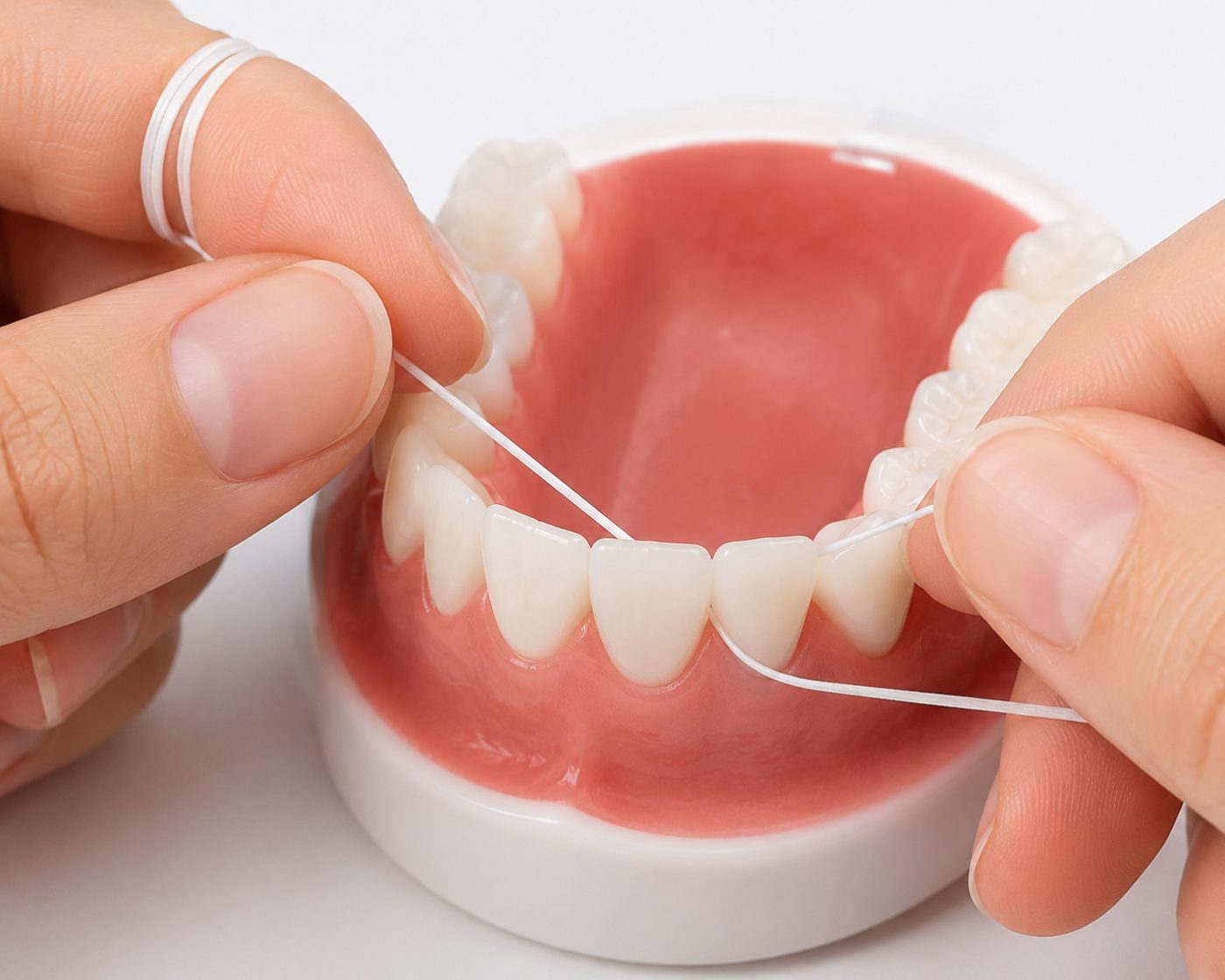
In short: Yes. A toothbrush can’t reach the surfaces between your teeth — about a third of each tooth — where cavities and gum disease often start. Floss (or use interdental brushes or a water flosser) once a day, ideally at night. If your gums bleed at first, keep going gently; it settles within a week or two.
Yes — and here’s why it matters more than most people think. A toothbrush, however good, only cleans three of the five surfaces of each tooth. The two surfaces between your teeth, where they touch each other, are where the bristles simply can’t reach. That’s exactly where cavities often start and where gum disease frequently begins, hidden out of sight.
Flossing once a day clears the plaque and trapped food from those in-between surfaces before it can harden into tartar or cause decay. Skipping it means roughly a third of each tooth never gets cleaned — which is why people who brush faithfully can still get cavities between their teeth and bleeding gums.
When and how:
- Do it once a day, and night-time is ideal so plaque isn’t left sitting overnight.
- Use about 45 cm of floss, guide it gently between the teeth, then curve it into a C-shape against each tooth and slide it under the gumline. Don’t snap it straight down onto the gums.
- If your gums bleed when you start flossing, that’s usually a sign of existing inflammation, not damage. Keep going gently and daily — the bleeding typically settles within one to two weeks as the gums get healthier.
If regular floss is awkward, interdental brushes or a water flosser work very well and are often easier — especially if you have braces, bridges or gaps. The best cleaner is the one you’ll actually use every day.
Not sure of your technique, or getting persistent bleeding? Mention it at your next check-up and we’ll show you what works for your mouth.