
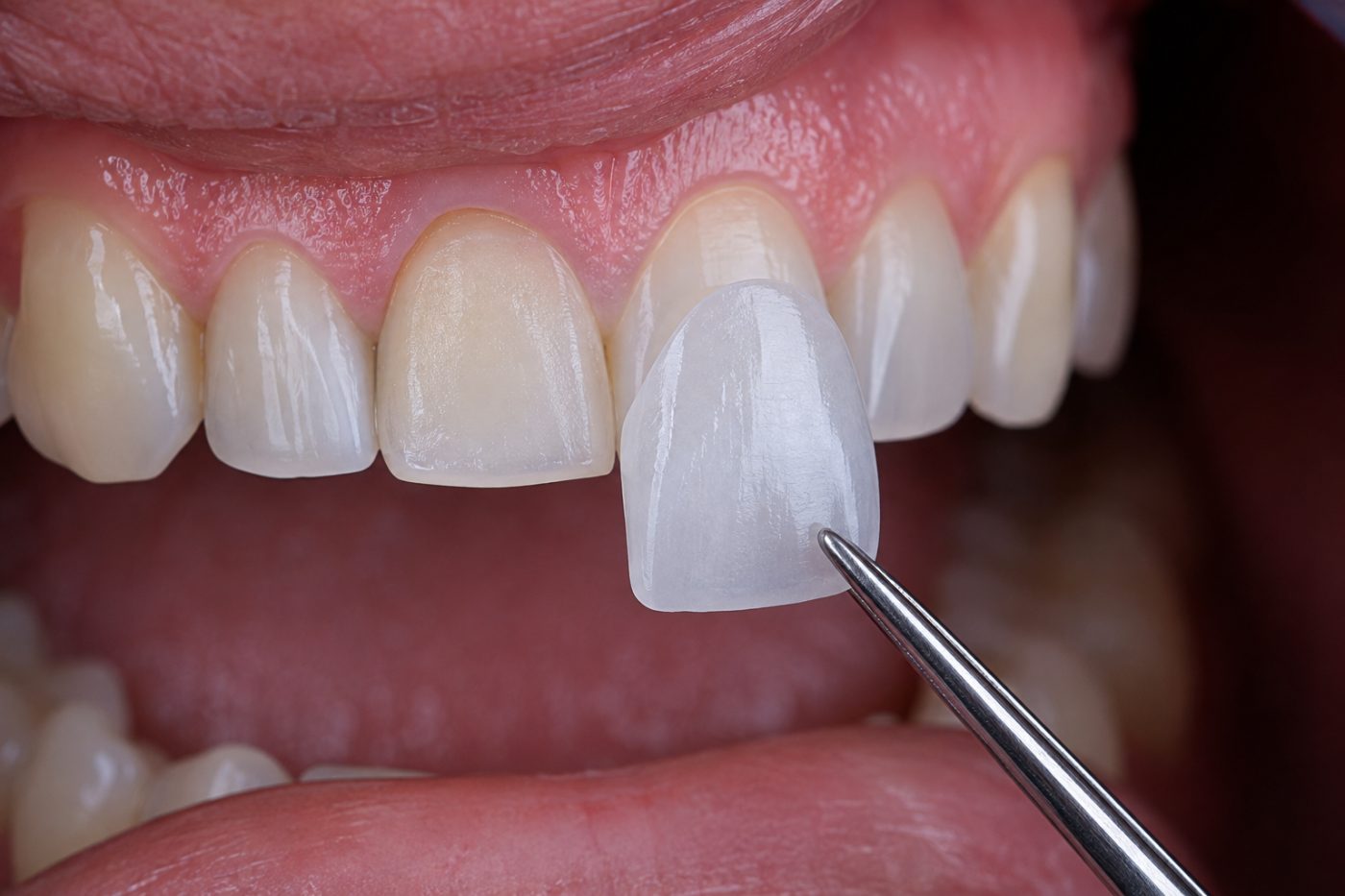
In short: Veneers are thin, custom shells bonded to the front of your teeth to improve their colour, shape and alignment — a popular way to transform a smile. They typically last 10–15 years or more with good care. They’re best for chips, gaps, stubborn stains and minor crookedness, but usually involve permanently reshaping a little enamel.
A dental veneer is a thin, tooth-coloured shell — usually made of porcelain or a composite resin — that is bonded to the front surface of a tooth. Veneers are a mainstay of cosmetic dentistry because they can dramatically improve a smile, correcting several issues at once:
- Discoloured teeth that won’t respond to whitening.
- Chipped or worn teeth.
- Gaps between teeth.
- Minor crookedness or misshapen teeth, without full orthodontics.
How long they last depends on the material and how you look after them:
- Porcelain veneers are strong and stain-resistant, typically lasting 10–15 years or more.
- Composite veneers cost less and are quicker to place, usually lasting 5–8 years, and are easier to repair.
To make them last, avoid biting hard objects (ice, pens, nails), wear a night guard if you grind, keep up excellent oral hygiene, and limit heavily staining habits.
One important point to consider: placing porcelain veneers usually involves removing a small amount of enamel to fit them, which is irreversible — so it’s a decision worth discussing carefully. In some cases, whitening, bonding or aligners may achieve what you want more conservatively.
If you’re considering veneers, book a smile design consultation and we’ll talk through whether they’re the right choice for your smile.